The Couperin Heritage
Four centuries of a dynasty that shaped the history of French music. It all began here, in Chaumes-en-Brie.
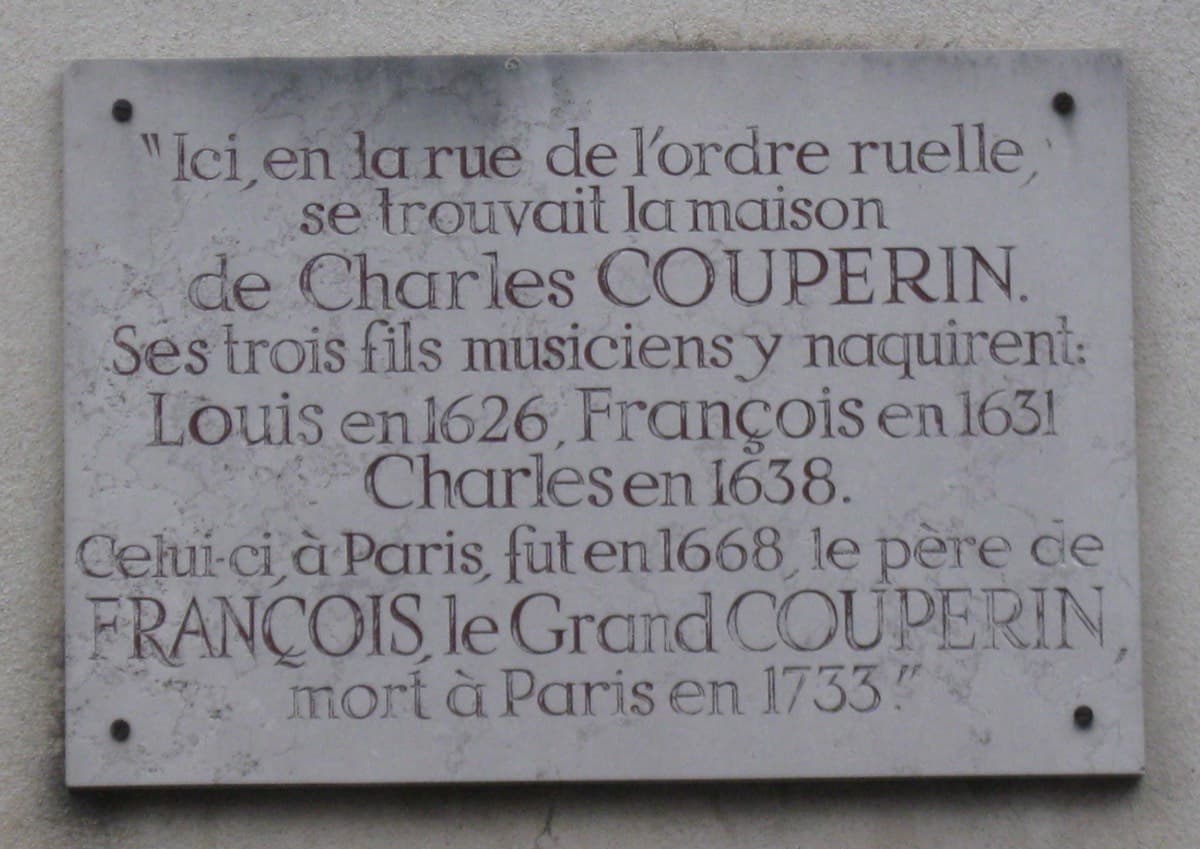
"Here, in the rue de l'ordre lane, stood the house of Charles COUPERIN. His three musician sons were born here: Louis in 1626, François in 1631, Charles in 1638. The latter, in Paris, was in 1668 the father of FRANÇOIS le Grand COUPERIN, who died in Paris in 1733."
The Couperin Dynasty
Louis Couperin
Chaumes-en-Brie — 1661, Paris
First of the three musician brothers. A virtuoso harpsichordist and organist, he was discovered by Jacques Champion de Chambonnières and became organist at Saint-Gervais church in Paris.
Pioneer of the French harpsichord style
François Couperin (the elder)
Chaumes-en-Brie — 1708, Paris
Louis's brother, he succeeded him as organist at Saint-Gervais. He helped establish the dynasty in Paris and passed on the family legacy to future generations.
Founder of the Saint-Gervais organist lineage
Charles Couperin
Chaumes-en-Brie — 1679, Paris
The youngest of the three brothers. Also organist at Saint-Gervais after Louis's death, he helped establish the family's reputation in the capital.
Continuator of the family tradition
François Couperin 'le Grand'
Paris — 1733, Paris
Son of Charles, nephew of Louis and François the Elder. Organist to King Louis XIV, harpsichordist of the King's Chamber, he is considered the greatest French keyboard composer of the Baroque era. His 'Pièces de clavecin' and 'Leçons de ténèbres' are universal masterpieces.
The 'French Bach' — Organist to the Sun King
Chaumes-en-Brie
50 kilometres east of Paris, in the heart of the Brie region, the small town of Chaumes-en-Brie holds a secret: it is here that one of the greatest French musical dynasties was born.
In the early 17th century, the Couperin family — probably winemakers or farmers — settled in this Brie township. Three brothers were born here: Louis, François and Charles. All three would become musicians, and their descendants would dominate French music for nearly two centuries.
Today, a memorial plaque still recalls their presence. But the birthplace of the Couperins no longer has a pipe organ worthy of this heritage.
Location
- Seine-et-Marne (77)
- Île-de-France Region
- 50 km from Paris (RER E + bus)
- Saint-Pierre et Saint-Paul Church
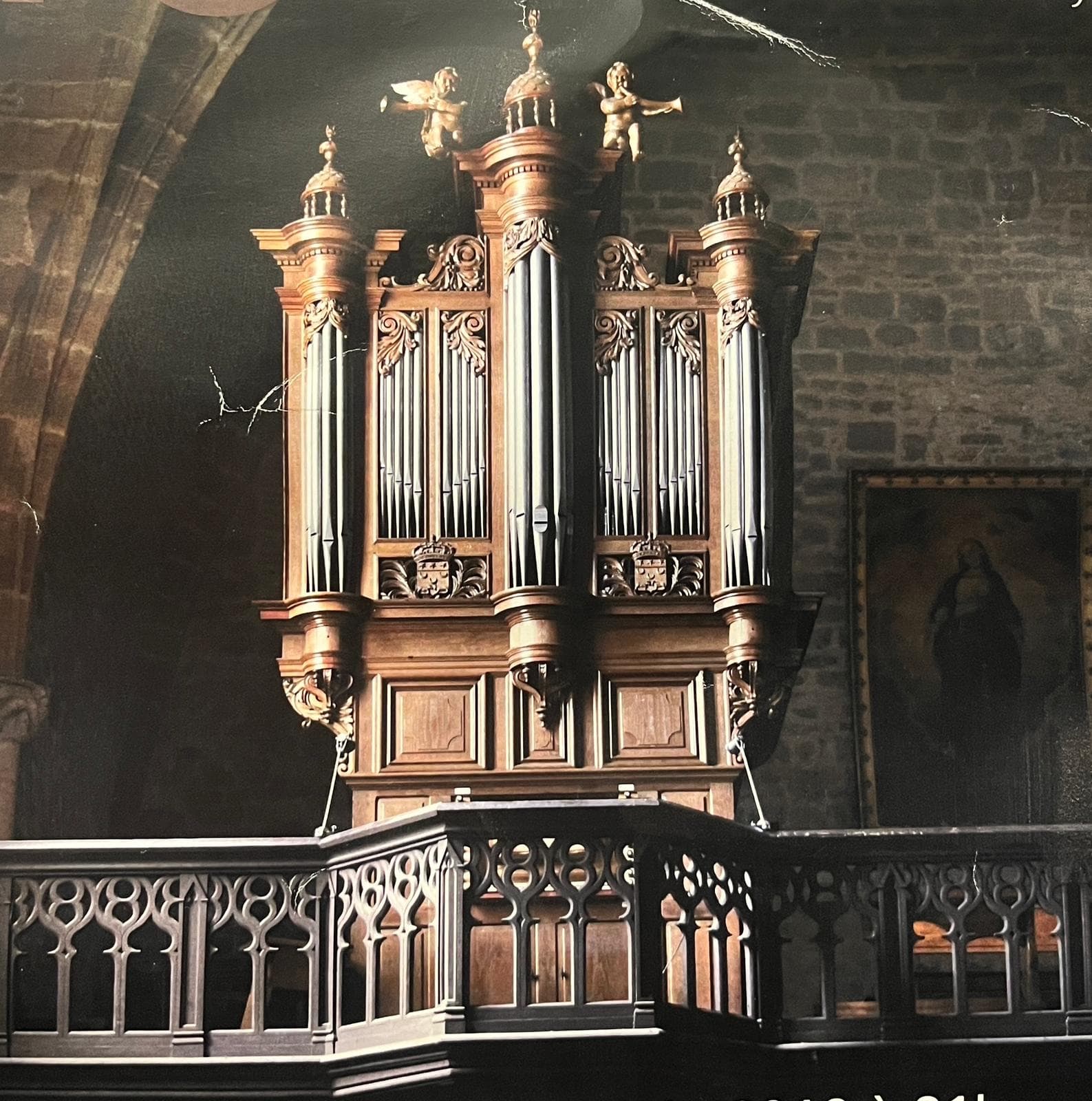
50 km from Paris, a quiet place at the origin of a major dynasty.
Why a pipe organ here?
François Couperin "le Grand" is performed worldwide today. His works for organ and harpsichord are absolute references of the Baroque repertoire.
In Chaumes-en-Brie, where it all began, the church no longer has a pipe organ capable of conveying this music in all its depth.
Honouring the Couperin heritage does not mean freezing it in the past,
but giving it an instrument able to speak to the present.
This intention gave birth to the L'Héritage des Couperin association project: to build a pipe organ in Chaumes-en-Brie church, so that the music of the Couperins may resound where it naturally belongs.
It is not about reconstructing the past, but creating the conditions for a living dialogue between historical writing and contemporary musical practice.
A pipe organ as a tool for transmission, not as a frozen monument.
Perpetuate the heritage
Participate in building an instrument that will make the memory of the Couperins resonate for centuries to come.
Support the project