The Instrument
An organ of dialogue and experience, designed for real practice. The project centres on an instrument in the extended French classical style, with controlled openings towards the German Baroque.
The construction will be entrusted to an organ builder selected through a public consultation process.
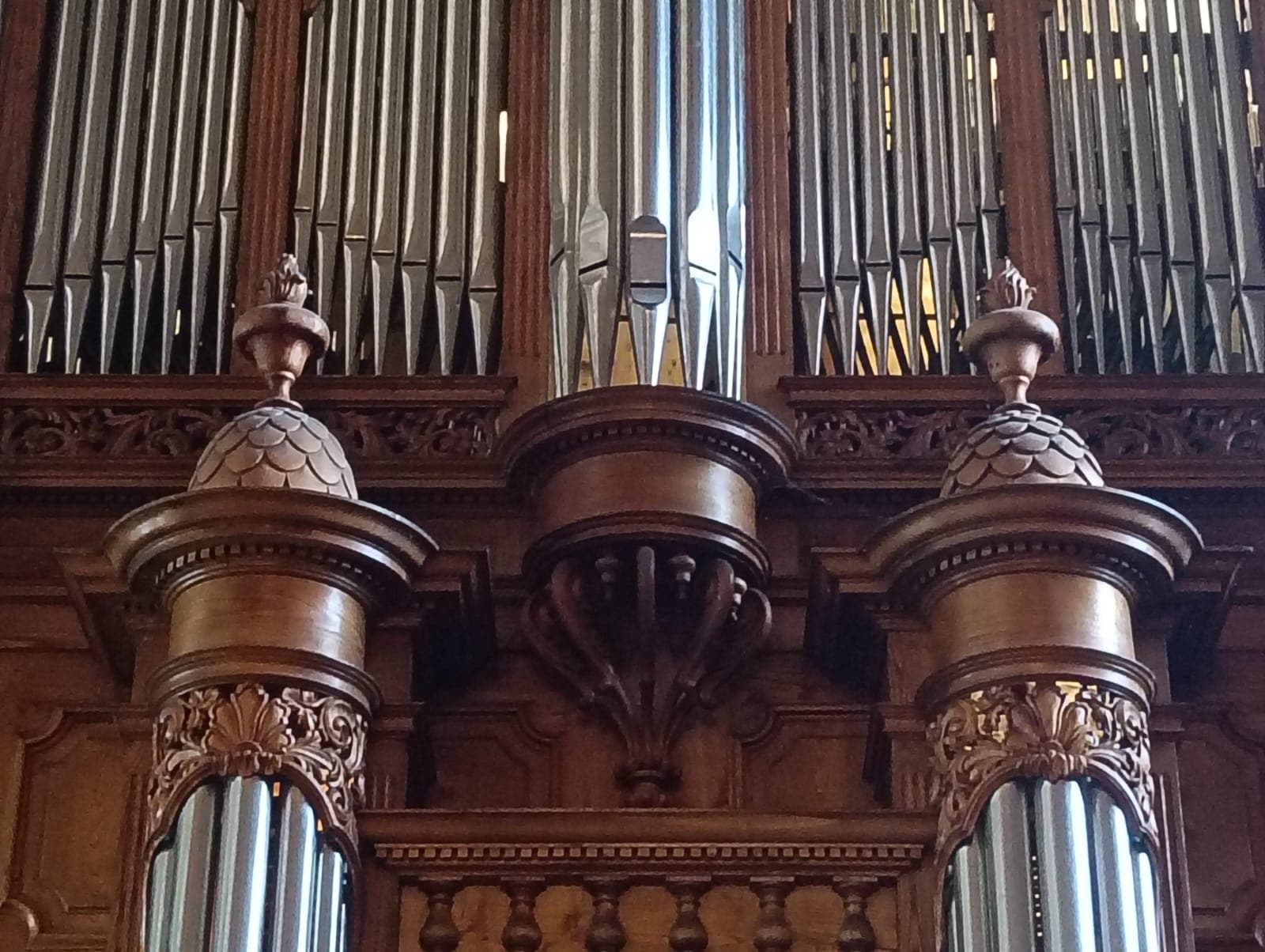
Key axes of the musical programme
Resonance manual
Conceived as the expressive heart of the instrument — depth, support and colour
Inner Positive as Echo
A fourth distinct sound plane, for dialogue and clarity
Complementary Cornets
An extended palette for récits and dialogues
Poetic accessories
Nightingales, birds — extending Baroque aesthetics

Echo arrangement — inner sound plane according to Dom Bedos de Celles
L'Art du facteur d'orgues, Part I, Ch. VI
"As this stop is enclosed in the base of the organ case, it is barely heard in the church; the sound appears very distant."
This principle of an inner sound plane, distinct and deliberately distant, underpins the Inner Positive as Echo concept — rare in contemporary organs.
Musical programme: manual functions
The project is based on a 4-manual organ. The detailed specification will be defined with the selected builder, based on the musical functions described below.
These descriptions constitute a framework of musical intentions, subject to evolution through dialogue with the organ builder and heritage authorities.
Clarity, articulation, dialogue
A distinct sound plane, designed for dialogue and clarity. This manual will offer a palette of articulate timbres, suited to ornamentation and lighter pieces. Its inner placement, inspired by the Echo principle, gives it a distinctive sonic presence.
Inner Positive as Echo — a rare design in France, fundamental for Couperin music.
Structure, plenum, authority
The principal manual of the instrument, designed to provide harmonic structure and the plenum. The programme envisions a clear and balanced Great, capable of carrying both French classical repertoire and the great works of the German Baroque.
Clear Great, never massive — ideal for Couperin as well as Bach.
Expressive heart — depth, support, colour
A major axis of the musical programme. This manual is conceived as the expressive heart of the instrument: it provides harmonic depth, supports the other sound planes, and offers an extended palette of colours. Usable through pedal coupling, it enriches the pedal and contributes to the overall cohesion.
Resonance manual with pedal coupling — a rare design in contemporary French organ building.
Foundation and breath
A pedalboard designed to provide the instrument's foundation. The programme envisions a pedal capable of dialoguing with the other sound planes, enriched by the Resonance coupling.
Interchangeable French / German pedalboard.
Focus: the Resonance manual
The project places central importance on a Resonance manual, conceived as the expressive heart of the instrument. Its final form will be developed with the selected organ builder, but its musical role — depth, support and colour — constitutes one of the programme's key axes.
Also known as a "bass manual" in certain Mediterranean organs, this sound plane is designed to fulfil a central function: rich harmonic foundation, extended palette of colours, dialogues with the Great and Positive, and pedal support.
The musical programme envisions registers that confer gravity to the instrument, as well as récit capability.
A rare orientation in contemporary French organ building, designed for dialogue and musical experience.
How the manuals dialogue
Couplers allow the combination of sound planes.
Pedal couplers
- Great → Pedal
- Resonance → Pedal
Manual couplers
- Positive ↔ Great
- Resonance ↔ Great
Playable from the keyboard, extending Baroque aesthetics without counting as stops.
- Nightingales
Pipes gurgling in water
- Birds playable from keyboard
Melodically playable by hand
- Carillon
Dutch bells (optional)
An instrument designed for recording
Technical requirements integrated from the design stage.
Conceived as a concert and working instrument, the project plans to integrate professional recording requirements from the outset.
- Dedicated audio power supply, separate from lighting
- Careful earthing to minimise interference
- Environment compatible with microphones and sensitive equipment
The instrument's layout, the clarity of its sound planes and the church's acoustic depth allow natural recordings, without artifice, suited to both concert and studio use.
Planned structure
This table presents the musical balance sought. The exact number of stops per manual will be defined with the selected organ builder.
| Manual | Intended function |
|---|---|
| I. Inner Positive | Clarity, articulation, dialogue |
| II. Great | Structure, plenum, authority |
| III. Resonance | Expressive heart — depth, support, colour |
| IV. Pedal | Foundation and breath |
| TOTAL PLANNED | 30–35musical stops(+ poetic accessories) |
The Chaumes-en-Brie organ will be subject to a consultation with qualified organ builders.
The information presented on this page describes the spirit, tonal balance and musical functions sought — not a final specification.
The final specification will be established following this process, in accordance with heritage requirements and in dialogue with institutional partners.
A project of dialogue, experience and transmission
Does this project speak to you?
Support its realisation and join the Couperin adventure.
An instrument designed to be played, transmitted and shared.