Repertoire
Five centuries of organ music, from Schlick to Naji Hakim. A chronological overview of the composers whose works inform the artistic orientations of the project.
For each composer, a marker indicates the place of their repertoire within the artistic orientations of the project.
This classification reflects the place of these repertoires within the artistic and educational orientations of the project. It does not constitute a technical indication regarding the design of the instrument.
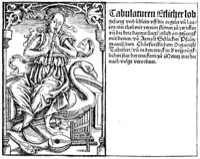
Arnolt Schlick
Repertoire in dialogue1460–1521 · German Renaissance
Arnolt Schlick served as an organist at Trier Cathedral, where he composed notable organ works that exemplify the Renaissance German style. His "Speculum musices," published in 1512, is one of the earliest printed books on organ music and includes theoretical discussions alongside practical pieces, making him a pivotal figure in early organ music history.
Tabulatura Nova — Open repertoire
Antonio de Cabezón
Core repertoire1510–1566 · Spanish Renaissance
Organist at the court of Charles V and then of Philip II of Spain, Cabezón is the founder of the Iberian keyboard school. Blind from birth, he composed tientos and diferencias of great depth that influenced all of Spanish music.
Tiento del primer tono — Core repertoire
Claudio Merulo
Open repertoire1533–1604 · Italian Renaissance
First organist at Saint Mark's Basilica in Venice from 1566 to 1584, Claudio Merulo was considered by his contemporaries as the greatest organist of his time. His Toccate d'intavolatura d'organo (1598 and 1604, two books) revolutionized keyboard writing by alternating contrapuntal sections with virtuosic ricercar-style passages, creating the sectional toccata that would influence Sweelinck, Frescobaldi, and the entire North German school through to Bach. Girolamo Diruta's treatise Il Transilvano (1593) is dedicated to him. He also published canzoni, ricercari, and masses for organ before ending his career in Parma.
Toccate d'intavolatura d'organo, Libro I — Toccata prima — Open repertoire
William Byrd
Repertoire in dialogue1540–1623 · English Renaissance
William Byrd, English composer of the Renaissance period, served as an organist at Lincoln Cathedral and later at the Chapel Royal. Renowned for his sacred and secular polyphonic works, Byrd also composed significant organ music, including voluntaries and variations on traditional plainchants. His contributions have cemented his status as a pivotal figure in the development of English keyboard music.
Voluntary for organ II (B.46) — Open repertoire
Costanzo Antegnati
Repertoire in dialogue1549–1624 · Italian Renaissance
Costanzo Antegnati served as organist at the Cathedral of Milan, continuing his family’s prestigious tradition in instrument making and composition. His organ works exemplify the Italian Renaissance style with their intricate polyphony and expressive ornamentation. Antegnati's contributions are significant to the development of organ music, showcasing technical mastery and aesthetic refinement that influenced subsequent generations of composers and performers.
Toccata quarta — Open repertoire
Giovanni Gabrieli
Open repertoire1557–1612 · Venetian Renaissance
Giovanni Gabrieli served as principal organist at St. Mark's Basilica in Venice, a position that allowed him to compose extensively for the organ and contribute significantly to its repertory during the Venetian Renaissance. His works for organ, including ricercars and canzonas, exemplify the polychoral style of the period and expanded the technical capabilities expected of performers. Gabrieli's compositions remain foundational in the history of organ music, influencing generations of composers and musicians.
Canzona duodecimi toni a 8 — Open repertoire
Hieronymus Praetorius
Open repertoire1560–1629 · German Renaissance
Hieronymus Praetorius served as an organist at the Marienkirche in Hamburg, where he composed numerous works for the organ that exemplify the Renaissance style. His contributions include chorale preludes and fantasias that showcase his mastery of counterpoint and his ability to blend Lutheran chorales with complex polyphony. Praetorius's organ music is notable for its technical sophistication and emotional depth, establishing him as a significant figure in the development of German organ literature during the Renaissance period.
Praeambulum et Fuga super Maria zart — Open repertoire
Sebastián Aguilera de Heredia
Open repertoire1561–1627 · Spanish Renaissance
Sebastián Aguilera de Heredia served as an organist at the Cathedral of Seville, where he composed numerous works for the organ that exemplify the grandeur and complexity of Renaissance Spanish style. His contributions to the organ repertoire are marked by their intricate polyphony and expressive use of registration, making him a pivotal figure in the development of Iberian organ music during the late 16th and early 17th centuries.
Tiento de primer tono — Open repertoire

Jan Pieterszoon Sweelinck
Core repertoire1562–1621 · Northern Renaissance
Organist of the Oude Kerk in Amsterdam, Sweelinck was nicknamed the "maker of organists" for having trained the founders of the North German school. His fantasias, toccatas, and variations form a bridge between English, Italian, and German styles.
Fantasia Chromatica — Core repertoire

John Bull
Open repertoire1562–1628 · English Renaissance
John Bull, an eminent English composer of the Renaissance period, served as organist at the chapel royal under Queen Elizabeth I and later in Utrecht. Renowned for his virtuosic keyboard skills, Bull composed numerous organ works that exemplify the English style with intricate polyphony and improvisational flair. His contributions were pivotal in advancing the technical capabilities and expressive range of organ music during the late 16th and early 17th centuries.
Voluntary in F major — Open repertoire
Jean Titelouze
Core repertoire1563–1633 · Early French Classical
Organist of Rouen Cathedral, Jean Titelouze is considered the founding father of the French organ school. His "Hymnes de l'Église" (1623) and "Le Magnificat" (1626) are the first printed organ works in France.
Hymne Ave Maris Stella — Core repertoire
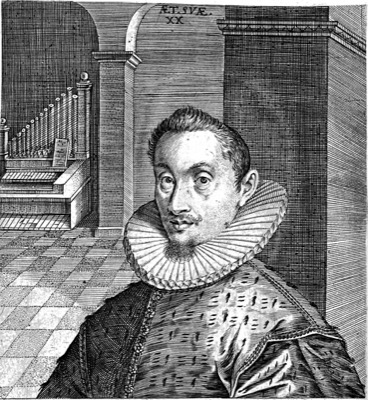
Hans Leo Hassler
Repertoire in dialogue1564–1612 · German Renaissance
Organist at the prestigious Church of Our Lady in Nuremberg, Hans Leo Hassler was a pivotal figure in the German Renaissance. Renowned for his sacred vocal works, Hassler also made significant contributions to organ music with his collections published posthumously. His compositions exemplify the German polyphonic style and exerted a profound influence on subsequent generations of composers, securing his legacy as an important innovator in early Baroque organ music.
Toccata in D minor — Open repertoire
Ascanio Mayone
Repertoire in dialogue1565–1627 · Neapolitan Renaissance
Organist at the Naples Cathedral, Ascanio Mayone was a prominent figure in the Renaissance Napolitain style. Renowned for his intricate organ compositions, which blended local traditions with broader European influences, Mayone's works contributed significantly to the development of Italian organ music during the late 16th and early 17th centuries. His legacy is marked by an innovative approach that enriched the organ repertory with complex counterpoint and expressive ornamentation.
Toccata e Fuga in Do minore — Open repertoire
Christian Erbach
Repertoire in dialogue1570–1635 · German Renaissance
Organist at the Church of St. Martin in Ulm, Christian Erbach was a prominent figure in the German Renaissance organ tradition. His compositions, particularly his chorale settings and free works for organ, showcase a masterful command of counterpoint and texture. Erbach's contributions to the repertoire were significant, influencing subsequent generations of organists and composers throughout Europe.
Praeambulum et fugue super 'Veni Creator Spiritus' — Open repertoire
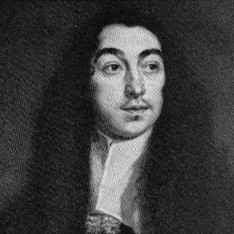
Thomas Tomkins
Repertoire in dialogue1572–1656 · English Renaissance
Thomas Tomkins served as organist at Worcester Cathedral during the English Renaissance, contributing significantly to the development of English organ music. Known for his skillful compositions that blend vocal and instrumental styles, Tomkins's works for the organ exemplify the rich polyphonic traditions of his time. His contributions are crucial in the history of organ music, marking a bridge between the Renaissance and early Baroque periods in England.
Voluntary in G minor — Open repertoire
Giovanni Maria Trabaci
Repertoire in dialogue1575–1647 · Neapolitan Baroque
Organist at the Naples Cathedral from 1620, Giovanni Maria Trabaci was a prominent figure in the Baroque Neapolitan style. His extensive collection of organ works, including Toccate and Ricercari, showcases his mastery of counterpoint and improvisation techniques. Trabaci's compositions significantly influenced the development of Italian organ music during the early 17th century, earning him a lasting place in the history of organ literature.
Toccata e Fuga sopra il Canto fermo della Miserere — Open repertoire

Girolamo Frescobaldi
Core repertoire1583–1643 · Italian Baroque
Organist of the Basilica Saint-Pierre of Rome, Frescobaldi is the father of the Italian organ school and one of the greatest keyboard composers of his time. His "Fiori musicali" (1635) exerted considerable influence throughout Europe, reaching as far as Bach.
Toccata per l'Elevazione — Core repertoire
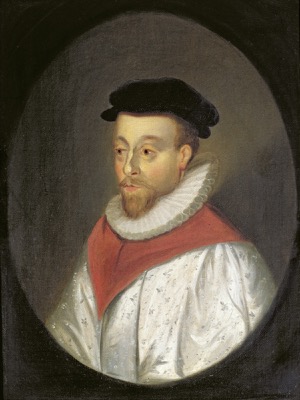
Orlando Gibbons
Repertoire in dialogue1583–1625 · English Renaissance
Organist at King's College Cambridge from 1603 until his death, Orlando Gibbons was a prominent figure in Renaissance English music. His contributions to organ music include several fantasias that showcase the florid and intricate style characteristic of the period. Gibbons’s works are significant for their integration of vocal polyphony into keyboard composition, influencing the development of English organ music.
Voluntary for Organ I — Repertoire in dialogue
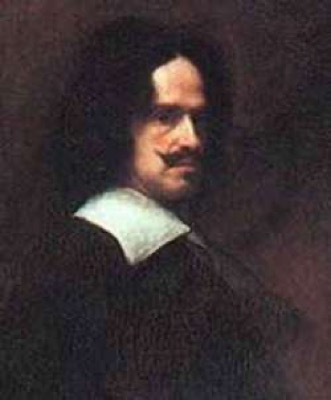
Francisco Correa de Arauxo
Open repertoire1584–1654 · Spanish Baroque
Organist at the collegiate church of Nuestra Señora de la Asunción in Salamanca, Francisco Correa de Arauxo was a pivotal figure in Spanish Baroque organ music. His magnum opus, "Facultad Organica" (1626), is a seminal work that delineates intricate techniques and compositional forms of the time. Arauxo's contributions significantly enriched the organ repertoire with his profound understanding of counterpoint and ornamentation, establishing him as a cornerstone in the history of Iberian organ music.
Toccata y fuga en re menor — Open repertoire
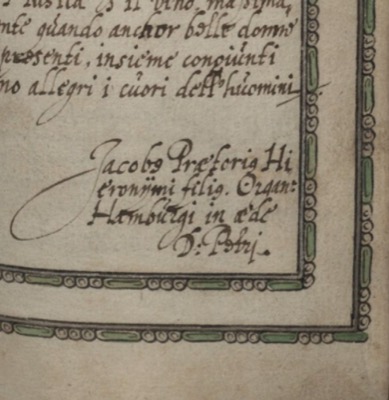
Jacob Praetorius le Jeune
Open repertoire1586–1651 · North German Baroque
Jacob Praetorius served as an organist in Hamburg and composed prolifically for the organ, contributing significantly to the development of North German Baroque organ music. His works exemplify the contrapuntal complexity and expressive power characteristic of his era, influencing subsequent generations of organ composers. Praetorius's contributions are vital to understanding the evolution of organ composition during the Baroque period in Northern Germany.
Praeambulum et fugue super Magnificat quarti toni — Open repertoire
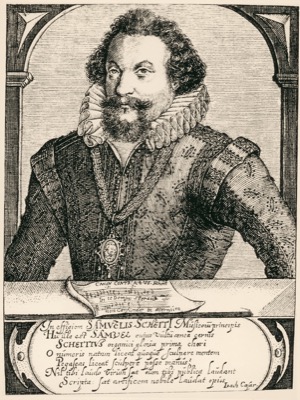
Samuel Scheidt
Repertoire in dialogue1587–1654 · German Baroque
Considered the father of German organ music, Samuel Scheidt was organist in Halle and a student of Jan Pieterszoon Sweelinck in Amsterdam. His Tabulatura Nova (1624), in three volumes containing fifty-seven pieces, is the founding monument of Germanic organ literature. The work introduced open-score notation replacing alphabetical tablature, revolutionizing editorial practice. His chorale variations, fantasias, toccatas, and liturgical pieces for the Lutheran Mass and Office established the formal models that subsequent generations would develop through to Bach.
Tabulatura Nova, Vol. II — Echo ad Manuale Duplex (SSWV 128) (SSWV 128) — Repertoire in dialogue
Melchior Schildt
Repertoire in dialogue1592–1667 · North German Baroque
Melchior Schildt served as an organist in Hamburg, where he significantly contributed to the development of North German Baroque organ music. His extensive collection of chorale preludes and fugues exemplify the stylistic characteristics of his era, blending contrapuntal complexity with expressive melody. Schildt's works were influential in shaping the organ repertory of Northern Germany during the 17th century, solidifying his legacy as a pivotal figure in early Baroque organ composition.
Praeambulum — Open repertoire

Heinrich Scheidemann
Repertoire in dialogue1595–1663 · North German Baroque
Co-founder of the North German organ school, Heinrich Scheidemann studied under Sweelinck in Amsterdam from 1611 to 1614, then became organist at the Catharinenkirche in Hamburg, a position he held for over thirty years. More organ music by Scheidemann survives than by any other composer of his time. His chorale fantasias, a genre he helped invent, combine Sweelinck's style with the resources of the developing German Baroque organ. His Magnificat cycles and chorale preludes directly anticipate the art of Buxtehude and Bach. Among his students was Johann Adam Reincken.
Magnificat VIII. Toni (Fantaisie chorale) — Repertoire in dialogue

Michelangelo Rossi
Repertoire in dialogue1601–1656 · Italian Baroque
Michelangelo Rossi, active during the Italian Baroque period, served as an esteemed organist at St. Peter's Basilica in Rome. His contributions to organ music include several notable works that exemplify the grandeur and technical sophistication characteristic of his era. Rossi’s compositions have earned him a significant place in the history of organ music, influencing subsequent generations of composers with their expressive depth and structural innovation.
Toccata e Corrente — Open repertoire
Delphin Strungk
Repertoire in dialogue1601–1694 · North German Baroque
Delphin Strungk served as an organist at various churches in Hamburg, significantly contributing to the Baroque north German style of organ music. His works are characterized by intricate counterpoint and expressive harmonies, which have influenced generations of organists. Strungk's compositions for the organ, including chorale preludes and fugues, are essential to the repertoire, exemplifying the technical and musical ideals of his era.
Praeludium et Fuga in G — Repertoire in dialogue
Giovanni Salvatore
Open repertoire1611–1688 · Neapolitan Baroque
Giovanni Salvatore served as an esteemed organist at Santa Maria Maggiore in Naples, contributing significantly to the Baroque Napoli style. His extensive collection of organ works exemplifies the virtuosity and technical mastery characteristic of his era, influencing generations of musicians. Salvatore's compositions are notable for their intricate ornamentation and rich harmonic language, solidifying his importance in the history of organ music.
Toccata, Adagio et Fuga — Open repertoire
Pablo Bruna
Repertoire in dialogue1611–1679 · Spanish Baroque
Pablo Bruna served as organist at the Cathedral of Tarragona, Spain, where he composed numerous works for the organ that exemplify the Baroque Spanish style. His compositions are characterized by intricate polyphony and an expressive use of registration, which have earned him a significant place in the history of organ music. Bruna's contributions to the development of Spanish organ literature during the 17th century remain highly influential and studied today.
Toccata y Fuga en Re menor — Open repertoire
Franz Tunder
Open repertoire1614–1667 · North German Baroque
Organist at the Marienkirche in Lübeck from 1641 until his death, Franz Tunder constitutes an essential link between the early German Baroque of Venetian influence and the later style culminating in Bach. Likely trained under Frescobaldi in Italy, he first served as court organist at Gottorf. In Lübeck, he initiated the tradition of Abendmusiken, free concerts funded by the city's merchants. His organ works — preludes, a canzona, and nine chorale fantasias — form the stylistic link between Sweelinck and Buxtehude, his successor who married his daughter Anna Margarethe.
Praeludium en sol mineur (I) — Open repertoire
Matthias Weckmann
Repertoire in dialogue1616–1674 · North German Baroque
Trained in Dresden by Heinrich Schütz and in Hamburg by Jacob Praetorius, Matthias Weckmann was appointed titular organist of the Jakobikirche in Hamburg in 1655, where he founded the Collegium Musicum. His organ works, among the most inventive of the pre-Buxtehude North German school, include monumental chorale variation cycles, toccatas, fantasias, and canzonas. His Es ist das Heil uns kommen her, in seven variations lasting about thirty-five minutes, is the longest 17th-century organ chorale work. His friendship with Froberger, born of a competition organized by the Elector of Saxony, enriched his style with Italian and French influences.
Es ist das Heil uns kommen her (7 variations) — Repertoire in dialogue
Johann Jacob Froberger
Repertoire in dialogue1616–1667 · German Baroque
Johann Jacob Froberger, an Austrian Baroque composer and organist, served as court organist in Vienna under Emperor Ferdinand III, significantly influencing the development of keyboard music. His works, particularly his suites and free organ pieces, exemplify the fusion of Italian, French, and German styles. Froberger’s innovative use of basso continuo and thematic variation techniques made him a pivotal figure in early Baroque organ music history.
Toccata VII (FWV 6:7) — Repertoire in dialogue
Abraham van den Kerckhoven
Repertoire in dialogue1618–1701 · Flemish Baroque
Abraham van den Kerckhoven served as an esteemed organist at several prominent churches in Antwerp, including Saint James's Church and Our Lady's Cathedral. Renowned for his mastery of the Baroque Flemish style, his extensive organ works significantly enriched the repertory of the period. Van den Kerckhoven’s contributions are celebrated for their intricate counterpoint and expressive use of the organ, marking him as a pivotal figure in the evolution of organ music during the late Baroque era.
Preludium et Fugue (OVK I/24) — Repertoire in dialogue

Louis Couperin
Core repertoire1626–1661 · French Classical
Eldest of the Couperin dynasty and organist at Saint-Gervais in Paris, Louis Couperin is a major figure of early French baroque. His organ pieces and unmeasured preludes count among the treasures of the 17th-century French repertoire.
Fantaisie — Core repertoire
Johann Caspar von Kerll
Open repertoire1627–1693 · German Baroque
Johann Caspar von Kerll served as an organist and composer at various prestigious churches, notably St. Peter's Abbey in Salzburg. His organ works, characterized by contrapuntal complexity and dramatic intensity, exemplify the Baroque German style. Kerll’s contributions were instrumental in bridging the Italian and German musical traditions, significantly influencing later composers such as Johann Pachelbel.
Toccata, Adagio et Fugue en fa mineur — Open repertoire
Jean-Henri d'Anglebert
Core repertoire1629–1691 · French Classical
Harpsichordist of the king's chamber and disciple of Chambonnières, d'Anglebert was one of the greatest masters of the French keyboard. His organ pieces, though few in number, include five fugues of remarkable contrapuntal density.
Fugue grave pour l'orgue — Core repertoire
Nicolas Lebègue
Core repertoire1631–1702 · French Classical
Organist at Saint-Merri in Paris and one of the founders of the French classical organ school, Nicolas Lebègue published three books of organ music that became authoritative. He contributed to codifying the forms and registrations of the genre.
Les Cloches — Core repertoire
Guillaume-Gabriel Nivers
Core repertoire1632–1714 · French Classical
Organist to the king and master of music at the Royal House of Saint-Cyr, Nivers is a pioneer of the French classical organ school. His three organ books (1665, 1667, 1675) are among the earliest of their kind and lay the foundations of the French style.
Dialogue — Core repertoire

Bernardo Pasquini
Repertoire in dialogue1637–1710 · Italian Baroque
Roman harpsichordist and organist, Pasquini was one of the central figures in the musical life of Rome at the end of the 17th century. His sonatas and toccatas for organ combine virtuosity with a thoroughly Italian expressiveness.
Toccata con lo Scherzo del Cucco — Repertoire in dialogue
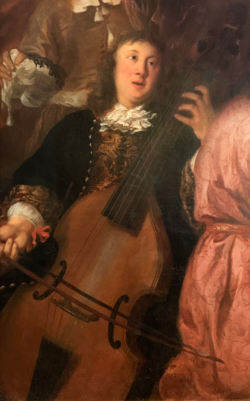
Dietrich Buxtehude
Core repertoire1637–1707 · North German Baroque
Organist of the Marienkirche in Lübeck for nearly forty years, Buxtehude was the uncontested master of North German organ music. His préludes, toccatas, and chaconnes profoundly influenced the young Bach, who walked 400 km to hear him play.
Prélude, Fugue et Chaconne en do majeur (BuxWV 137) — Core repertoire
Charles Couperin
Core repertoire1638–1679 · French Classical
Younger brother of Louis Couperin and father of François 'le Grand', Charles Couperin was organist at Saint-Gervais in Paris from 1661 until his death. A central figure in the dynasty, he ensured the transmission of the family's musical heritage, although none of his compositions have survived.
Œuvres non conservées — Core repertoire
André Raison
Core repertoire1640–1719 · French Classical
Organist of the royal abbey of Sainte-Geneviève in Paris, André Raison published two books of organ music (1688 and 1714) which constitute a precious testimony to the liturgical practice of French classical organ music.
Offerte du 5e ton — Core repertoire
Johann Adam Reincken
Repertoire in dialogue1643–1722 · North German Baroque
Organist at Saint Catherine's in Hamburg for more than fifty years, Reincken was a legendary master of the North German stylus phantasticus. Bach made two trips to Hamburg to hear him and improvised before him on "An Wasserflüssen Babylon."
An Wasserflüssen Babylon — Repertoire in dialogue
Juan Cabanilles
Open repertoire1644–1712 · Spanish Baroque
Dubbed the 'Spanish Bach,' Juan Bautista José Cabanilles was principal organist of Valencia Cathedral for over forty years (1665-1712), ordained priest in 1668. His considerable output — tientos of all types, batallas, tocatas, pasacalles, gallardas, and xácaras — represents the summit of 17th-century Iberian organ composition. Though thoroughly familiar with the Italian and French schools, he developed a highly personal language rooted in Spanish and Valencian tradition. His tientos de falsas explore bold dissonances, while his batallas deploy spectacular energy.
Pasacalles de primer tono (WSC 47) (WSC 47) — Open repertoire
Christian Ritter
Repertoire in dialogue1645–1725 · North German Baroque
Christian Ritter served as an organist at several important churches in Germany, notably at St. Mary's Church in Lübeck. Renowned for his intricate and expressive organ compositions, Ritter contributed significantly to the development of North German Baroque organ music. His works exemplify the contrapuntal complexity and technical virtuosity characteristic of the era, ensuring his enduring legacy as a pivotal figure in organ music history.
Praeludium et Fuga in D minor — Repertoire in dialogue
Jacques Boyvin
Core repertoire1649–1706 · French Classical
Organist of Rouen Cathedral for over thirty years, Jacques Boyvin published two books of organ music (1690 and 1700) that brilliantly exemplify the Norman classical style. His writing is characterized by a great nobility of tone.
Suite du Premier Ton - Plein Jeu — Core repertoire
Daniel Erich
Repertoire in dialogue1649–1712 · North German Baroque
Daniel Erich served as an organist at the St. Jacobi Church in Lübeck, contributing significantly to the Baroque north German organ tradition. His extensive collection of chorale preludes and fugues exemplifies the technical and expressive possibilities of the northern German organ style. Erich's works are notable for their contrapuntal complexity and emotional depth, securing his importance in the history of organ music.
Praeludium in C major — Repertoire in dialogue
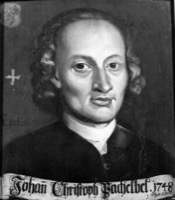
Johann Pachelbel
Repertoire in dialogue1653–1706 · German Baroque
Organist at Saint-Sebald in Nuremberg, Pachelbel is one of the great figures of South German baroque organ music. His chorales and magnificats, with their clear southern character, differ from the virtuosic style of the Northern school.
Chaconne en ré mineur — Repertoire in dialogue
Georg Muffat
Repertoire in dialogue1653–1704 · German Baroque
A truly international composer, Georg Muffat was born in Savoy, studied in Paris under Lully (1663-1669), then in Rome with Pasquini where he befriended Corelli. Organist and Kapellmeister in Salzburg and then Passau, he achieved a unique synthesis of French, Italian, and German styles. His Apparatus musico-organisticus (1690), dedicated to Emperor Leopold I, comprises twelve toccatas, a ciacona, a passacaglia, and a set of variations. It is the largest corpus of organ works published at the time and one of the summits of South German 17th-century organ repertoire.
Apparatus musico-organisticus — Passacaglia — Repertoire in dialogue
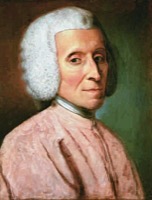
Vincent Lübeck
Repertoire in dialogue1654–1740 · North German Baroque
Organist at Saint-Nicolas in Hamburg, Vincent Lübeck is an eminent representative of the North German organ school. His preludes and fugues stand out for their virtuosic drive and the brilliance of their composition.
Prélude et Fugue en mi majeur — Repertoire in dialogue
Johann Kuhnau
Repertoire in dialogue1660–1722 · German Baroque
Johann Kuhnau served as the Thomaskantor in Leipzig, succeeding Johann Schelle, and was a pivotal figure in German Baroque organ music. His compositions for the organ, including "Neuer Baeumlein," showcase his mastery of counterpoint and textural clarity, making significant contributions to the development of the chorale prelude. Kuhnau's work bridged the styles of Sweelinck and Bach, influencing subsequent generations of organ composers.
Praeludium in C Major — Open repertoire
Georg Böhm
Repertoire in dialogue1661–1733 · German Baroque
Organist of the Johanniskirche in Lüneburg, Georg Böhm was one of the masters of German baroque organ music. His chorale partitas, blending French influences with northern German tradition, notably influenced the young Bach.
Prélude et Fugue en do majeur — Repertoire in dialogue
Johann Nicolaus Hanff
Repertoire in dialogue1663–1711 · North German Baroque
Johann Nicolaus Hanff served as an esteemed organist at St. Katharinen in Hamburg, where his mastery of the Baroque nord-allemand style significantly influenced local musicians. His compositions for the organ are celebrated for their intricate counterpoint and expressive melodies, contributing notably to the rich tapestry of Northern German Baroque organ music. Hanff's works have endured as essential study pieces for aspiring organists, highlighting his lasting impact on the genre.
Toccata, Fugue et Corrente — Open repertoire
Georg Dietrich Leyding
Repertoire in dialogue1664–1710 · North German Baroque
Georg Dietrich Leyding served as an esteemed organist at St. Nicolai church in Hamburg, Germany. Renowned for his intricate and harmonically rich organ compositions, Leyding significantly contributed to the development of the North German Baroque organ style. His works exemplify the period's technical virtuosity and expressive depth, solidifying his legacy in organ music history.
Praeludium in F major — Open repertoire
Nicolaus Bruhns
Repertoire in dialogue1665–1697 · North German Baroque
Pupil of Buxtehude and organist at Husum, Nicolaus Bruhns was a prodigy of North German organ music, who died at only 31 years old. The few preludes that have reached us bear witness to his dazzling genius and exceptional virtuosity.
Prélude en mi mineur (Grand) — Repertoire in dialogue
Johann Heinrich Buttstett
Repertoire in dialogue1666–1727 · German Baroque
Johann Heinrich Buttstett served as an organist at several important churches in his native Germany, including the Predigerkirche in Erfurt. His extensive collection of organ works exemplifies the intricate and expressive style characteristic of the Baroque era. Buttstett's contributions to the genre are marked by a profound influence on subsequent generations of composers, solidifying his status as a pivotal figure in the history of German organ music.
Praeludium in D minor — Repertoire in dialogue

François Couperin
Core repertoire1668–1733 · French Classical
Organist of Saint-Gervais in Paris and harpsichordist to the king, François Couperin is one of the major figures of the French classical organ school. His two organ masses, the "Messe pour les paroisses" and the "Messe pour les couvents," count among the masterpieces of the repertoire.
Messe pour les Paroisses - Kyrie — Core repertoire
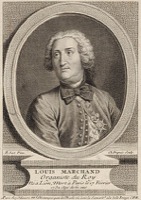
Louis Marchand
Core repertoire1669–1732 · French Classical
Legendary keyboard virtuoso, Louis Marchand was organist at several Parisian churches and the Royal Chapel. Tradition holds that he evaded a musical duel with Bach in Dresden in 1717.
Grand Dialogue — Core repertoire
Arnold Matthias Brunckhorst
Repertoire in dialogue1670–1725 · North German Baroque
Arnold Matthias Brunckhorst served as an esteemed organist at various churches in Hamburg, significantly contributing to the Baroque north German organ tradition. His extensive collection of organ works showcases the intricate counterpoint and expressive ornamentation characteristic of his era. Brunckhorst's compositions remain pivotal for understanding the development of organ music within the Baroque period, particularly influencing subsequent generations of northern German composers.
Toccata et Fugue en ré mineur — Repertoire in dialogue
Gaspard Corrette
Core repertoire1671–1733 · French Classical
Parisian organist, Gaspard Corrette is the author of a "Messe du 8e ton" for organ (1703) which distinguishes itself by its rhythmic vivacity and expressive character. He should not be confused with his son Michel Corrette.
Messe du 8e ton - Plein Jeu — Core repertoire
Nicolas de Grigny
Core repertoire1672–1703 · French Classical
Organist of Reims Cathedral, Nicolas de Grigny is the author of a single "Livre d'orgue" (1699) of such perfection that J. S. Bach made a complete manuscript copy of it. His writing combines French tradition with a remarkable harmonic depth.
Premier Livre d'Orgue - Kyrie en taille — Core repertoire
Pierre Du Mage
Core repertoire1674–1751 · French Classical
Organist of Saint-Quentin, Pierre Du Mage left behind only a single "Livre d'orgue" (1708) of great quality. This suite in the first mode, directly in the lineage of Grigny, demonstrates a complete mastery of the French style.
Suite du Premier Ton - Grand Jeu — Core repertoire
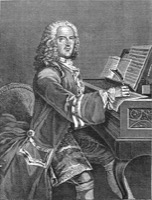
Louis-Nicolas Clérambault
Core repertoire1676–1749 · French Classical
Organist at Saint-Sulpice and later at the Maison royale de Saint-Cyr, Clérambault is chiefly renowned for his French cantatas. His "Suite du deuxième ton" for organ is a model of elegance and clarity in the French classical style.
Suite du Premier Ton - Plein Jeu — Core repertoire
Jean-Adam Guilain
Core repertoire1680–1739 · French Classical
Organist probably of German origin active in Paris, Jean-Adam Guilain left behind four "Suites de pièces d'orgue" (circa 1706) in a style reminiscent of Lebègue and Boyvin. His exact identity remains uncertain.
Suite du 1er ton - Plein Jeu — Core repertoire
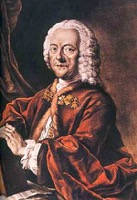
Georg Philipp Telemann
Open repertoire1681–1767 · German Baroque
Director of music in Hamburg and one of the most prolific composers in history, Telemann also composed for the organ. His 48 chorales in "Musicalisches Lob Gottes" and his various pieces attest to his clear and elegant style.
Chorale Prelude "Allein Gott in der Höh" (TWV 31:1) — Open repertoire

Jean-François Dandrieu
Core repertoire1682–1738 · French Classical
Organist at Saint-Merri in Paris, Dandrieu is the author of a "Livre de pièces d'orgue" (circa 1739) comprising remarkable varied noëls. His style is distinguished by rich ornamentation and graceful melodic invention.
Offertoire en sol — Core repertoire
Johann Gottfried Walther
Repertoire in dialogue1684–1748 · German Baroque
Organist of the Stadtkirche in Weimar and cousin of J. S. Bach, Walther is the author of an important body of transcriptions for organ of Italian concertos and elaborate chorales. He is also the author of the first German music dictionary (1732).
Concerto en si mineur (d'après Vivaldi) — Repertoire in dialogue

Johann Sebastian Bach
Core repertoire1685–1750 · German Baroque
Cantor of St. Thomas in Leipzig, Johann Sebastian Bach is universally regarded as the greatest composer for organ of all time. His organ works, from preludes and fugues to the Leipzig chorales, constitute the absolute summit of the repertoire.
Toccata et Fugue en ré mineur (BWV 565) — Core repertoire
Georg Friedrich Händel
Open repertoire1685–1759 · German Baroque
Georg Friedrich Händel served as an organist in Hamburg at the German Theatre and later gained prominence for his versatility across various musical forms. His organ concertos and numerous harpsichord works, which were often transcribed for the organ, showcase his mastery of counterpoint and harmonic innovation. Händel's contributions are pivotal in organ music history, exemplifying the grandeur and complexity characteristic of Baroque music.
Concerto in F major (organ concerto), HWV 398 (HWV 398) — Open repertoire
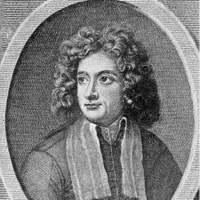
Domenico Zipoli
Repertoire in dialogue1688–1726 · Italian Baroque
Italian composer and Jesuit missionary, Zipoli settled in South America where he evangelized through music. His « Sonate d'intavolatura » (1716), published in Rome before his departure, contains organ pieces of melodious simplicity.
Sonate d'Intavolatura - Toccata — Repertoire in dialogue
Louis-Claude Daquin
Core repertoire1694–1772 · French Baroque
Louis-Claude Daquin served as organist at Sainte-Chapelle in Paris from 1723 until his death, showcasing his virtuosity and compositional skill. His organ works, including "Le Coucou" and various toccatas, exemplify the French Baroque style with their intricate ornamentation and expressive melodies. Daquin's contributions are pivotal in organ music history, bridging the gap between the early Baroque and pre-Classical periods with his innovative compositions and performances.
Trois Messes brèves — Core repertoire
Johann Ernst Eberlin
Repertoire in dialogue1702–1762 · German Baroque
Johann Ernst Eberlin served as an organist at various churches in Alsace, notably at the Munster in Colmar. Renowned for his intricate and technically demanding organ compositions, his works exemplify the refined Baroque style of the German school. Eberlin's contributions are pivotal to organ music history, particularly through his publication "Livre d'orgue," which remains a testament to his innovative approach to composition and his mastery of the organ.
Praeludium in D Minor — Open repertoire
Baldassare Galuppi
Repertoire in dialogue1706–1785 · Venetian Classical
Baldassare Galuppi served as an esteemed organist at Santa Maria della Visitazione in Venice, where his skill and compositions significantly influenced Venetian musical life. Renowned for his concerti for organ, which showcased virtuosic techniques and harmonic innovation, Galuppi's works expanded the expressive capabilities of the instrument. His contributions are pivotal to understanding the development of the Classical Venetian style in organ music history.
Toccata en mi bémol majeur — Repertoire in dialogue
Michel Corrette
Core repertoire1707–1795 · French Baroque
Michel Corrette, a prominent figure in Baroque French music, served as an organist and was known for his extensive pedagogical works and compositions for the organ. His contributions to organ literature include the "Méthode d'orgue" and numerous pieces that reflect the refined style of the French organ school. Corrette's works have remained significant in the study and performance of Baroque organ music, influencing generations of composers and performers.
Six Leçons pour l'Orgue — Core repertoire
Wilhelm Friedemann Bach
Repertoire in dialogue1710–1784 · German Baroque
Wilhelm Friedemann Bach, eldest son of Johann Sebastian Bach, served as an esteemed organist at churches in Dresden and Halle. Renowned for his virtuosity and innovative compositions, he contributed significantly to the Baroque organ repertoire with works that showcased complex counterpoint and expressive ornamentation. His importance in organ music history is marked by his profound influence on succeeding generations of composers and performers.
Toccata in D minor (BWV 538) — Open repertoire
John Stanley
Open repertoire1712–1786 · English Baroque
Organist at St George's Church in Cambridge and later at St Paul's Cathedral, John Stanley was a prominent figure in the Baroque English organ tradition. His extensive collection of organ compositions, including voluntaries and concertos, exemplifies the technical brilliance and lyrical expression characteristic of his era. Stanley's works have remained central to the organ repertoire, profoundly influencing subsequent generations of composers and performers.
Six Voluntaries — Repertoire in dialogue
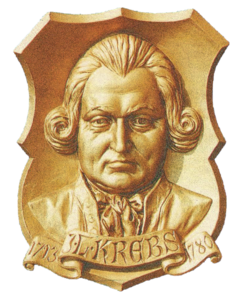
Johann Ludwig Krebs
Repertoire in dialogue1713–1780 · German Baroque
Favorite pupil of J. S. Bach in Leipzig, Johann Ludwig Krebs was organist at Altenburg. His abundant and varied organ works skillfully extend his master's legacy while embracing the gallant style.
Prélude et Fugue en do majeur (Krebs-WV 501) — Repertoire in dialogue

Carl Philipp Emanuel Bach
Repertoire in dialogue1714–1788 · Galant Style
Eldest son of J. S. Bach and a major figure in the galant style and Empfindsamkeit, C. P. E. Bach composed several organ sonatas. His writing, free and expressive, breaks with his father's contrapuntal tradition.
Sonate en la mineur (Wq 70/4) — Repertoire in dialogue
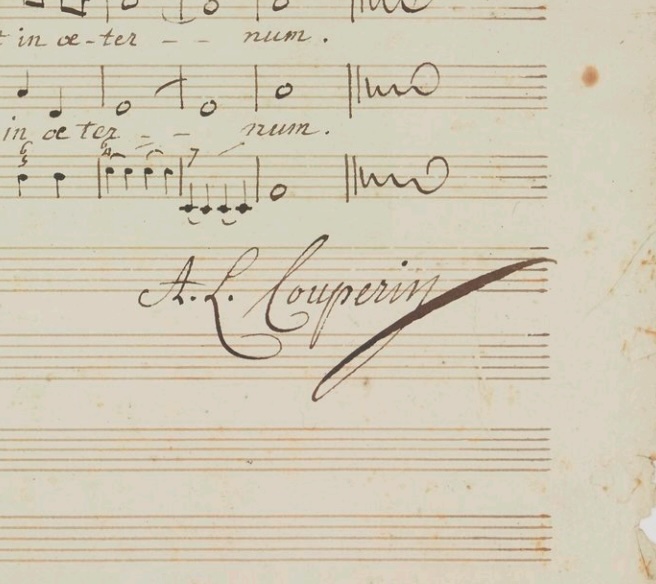
Armand-Louis Couperin
Repertoire in dialogue1727–1789 · French Classical
Great-great-nephew of François 'le Grand', Armand-Louis Couperin inherited the organist post at Saint-Gervais at age 21. A virtuoso praised by contemporaries including Charles Burney, he held multiple positions in Paris: Notre-Dame, Sainte-Chapelle, and the Royal Chapel. He died tragically in a traffic accident.
Élévation — Repertoire in dialogue
Padre Antonio Soler
Repertoire in dialogue1729–1783 · Spanish Classical
Padre Antonio Soler served as an organist at the Royal Monastery of El Escorial, where he composed numerous works for the organ. His organ compositions are notable for their intricate counterpoint and innovative use of form within the Spanish Baroque tradition. Soler's contributions to organ music have secured his position as a significant figure in the history of Iberian keyboard music, influencing subsequent generations of composers with his richly textured and technically demanding pieces.
Sonata for Organ No. 6 (Op. 47, No. 6) — Repertoire in dialogue
Joseph Haydn
Repertoire in dialogue1732–1809 · Viennese Classical
Master of Viennese Classicism and father of the symphony, Haydn composed numerous pieces for mechanical clock organ as well as concertos. These works combine the wit and elegance characteristic of his style.
Pièces pour horloge musicale No.1 (Hob. XIX:1) — Repertoire in dialogue
Johann Christian Kittel
Repertoire in dialogue1732–1809 · German Classical
Johann Christian Kittel served as an organist at several important churches in Germany, notably at the Stadtkirche in Weimar. His extensive oeuvre includes numerous cantatas, preludes, and fugues that showcase his mastery of counterpoint and harmony within the Classical German style. Kittel's contributions are significant for their integration of traditional Lutheran chorales with sophisticated compositional techniques, making him a notable figure in the evolution of organ music during the late 18th century.
Sonate en do majeur — Repertoire in dialogue
Jean-Jacques Beauvarlet-Charpentier
Core repertoire1734–1794 · French Classical
Jean-Jacques Beauvarlet-Charpentier served as an organist at various prestigious locations including Saint-Roch in Paris, where his compositions significantly enriched the city's musical landscape. Renowned for his virtuosic and stylistically refined organ works, he contributed extensively to the French Classical repertoire with pieces that exemplify clarity and elegance. His importance lies in bridging the Rococo style of the early 18th century with the emerging Neoclassical trends, influencing generations of organists and composers thereafter.
Messe en Ut majeur — Core repertoire
Guillaume Lasceux
Core repertoire1740–1831 · French Classical
The last great representative of the French Classical organ school, Guillaume Lasceux was titular organist of Saint-Étienne-du-Mont in Paris for fifty years (1774-1819). A renowned virtuoso famous for his improvisations on the Last Judgement, he survived the Revolution that devastated church musical life. His Essai théorique et pratique sur l'art de l'orgue (1809) constitutes a precious compendium of post-Revolutionary organ art, featuring pieces in a classical style influenced by Haydn and Mozart. His masses, Magnificat settings, Noëls, and remarkable Voix humaine pieces document the transition between the Baroque and Romantic traditions.
Messe pour orgue en sol majeur — Core repertoire
Wolfgang Amadeus Mozart
Repertoire in dialogue1756–1791 · Viennese Classical
Universal genius of Viennese classicism, Mozart composed a limited but remarkable body of work for the organ, including several church sonatas and the great "Fantaisie en fa mineur" K. 608. He described the organ as the "king of instruments."
Fantaisie en fa mineur (K. 608) — Repertoire in dialogue
Gervais-François Couperin
Core repertoire1759–1826 · French Classical
Son of Armand-Louis and last representative of the Couperin dynasty, Gervais-François was organist at Saint-Gervais, Sainte-Chapelle, and several Parisian churches. He survived the Revolution and played patriotic airs at the reopening of the Opera in 1793. With him ended nearly two centuries of family musical tradition.
Œuvres dispersées — Core repertoire
Samuel Wesley
Repertoire in dialogue1766–1837 · English Classical
Samuel Wesley, an eminent English composer of the Classical era, served as organist at Hereford Cathedral and later at Trinity College, Cambridge. Renowned for his virtuosic organ compositions, which include fantasias and voluntaries, Wesley significantly contributed to the development of British organ music. His works reflect a profound understanding of Baroque forms infused with emerging Classical ideals, solidifying his legacy in the history of organ music.
Voluntary in G Major — Open repertoire
Johann Christian Heinrich Rinck
Repertoire in dialogue1770–1846 · German Classical
Organist at St. Catherine’s Church in Hamburg and later at St. Nikolai, Johann Christian Heinrich Rinck was a significant figure in the German organ tradition during the late Classical period. His compositions for the organ, including numerous preludes, fugues, and chorale settings, exemplify the clarity and formal discipline characteristic of his era. Rinck’s works continue to be valued for their technical proficiency and aesthetic refinement, contributing notably to the organ music literature of the early 19th century.
Sonate pour orgue en do majeur — Repertoire in dialogue
Alexandre Pierre François Boëly
Core repertoire1785–1858 · French Romantic
Alexandre Pierre François Boëly served as an esteemed organist at various churches in Paris, including Saint-Roch and Saint-Sulpice. Renowned for his virtuosic playing and innovative compositions, Boëly's organ works exemplify Romantic expressiveness while maintaining a connection to French classical traditions. His contributions significantly enriched the French Romantic organ repertoire and influenced subsequent generations of composers and performers.
Messe solennelle pour orgue — Core repertoire

Felix Mendelssohn
Core repertoire1809–1847 · German Romantic
Central figure of German Romanticism, Mendelssohn contributed to the rediscovery of Bach's work and composed for the organ six sonatas and remarkable preludes and fugues. His organ sonatas paved the way for the revival of Romantic organ music in Germany.
Sonate No.1 en fa mineur (Op. 65/1) — Core repertoire
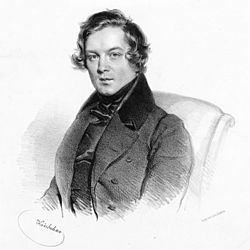
Robert Schumann
Repertoire in dialogue1810–1856 · German Romantic
A major figure of German Romanticism, Schumann composed for organ (or pedalboard) his "Six Études en forme de canon" op. 56, the "Esquisses" op. 58, and the "Six Fugues sur B-A-C-H" op. 60, works that combine contrapuntal rigor with poetic imagination.
Études pour pédalier - Canon en si mineur (Op. 56/5) — Repertoire in dialogue
Samuel Sebastian Wesley
Repertoire in dialogue1810–1876 · English Romantic
Samuel Sebastian Wesley served as organist at Hereford Cathedral and later at St. Paul's Church in Hammersmith, London, where his innovative compositions for the organ garnered acclaim. His extensive organ works, characterized by Romantic expressiveness and technical virtuosity, significantly contributed to the development of British organ music. Wesley is remembered for expanding the repertoire with complex and emotionally rich pieces that set a new standard for future generations of organists and composers.
Voluntary No. 4 in D Minor — Open repertoire
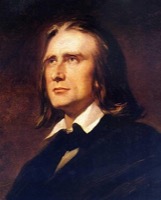
Franz Liszt
Exploratory repertoire1811–1886 · Romantic
Piano virtuoso and major figure of Romanticism, Liszt composed for the organ works of visionary power, including the "Fantasy and Fugue on Ad nos, ad salutarem undam" and the "Prelude and Fugue on B-A-C-H." He opened new expressive horizons to the organ.
Prélude et Fugue sur B-A-C-H (S. 260) — Exploratory repertoire
Louis James Alfred Lefébure-Wély
Repertoire in dialogue1817–1869 · French Romantic
Organist at Saint-Merri in Paris from 1839, Louis James Alfred Lefébure-Wély became renowned for his virtuosic organ performances and compositions. His extensive body of work includes symphonic poems for solo organ that exemplify the Romantic French style, blending technical brilliance with poetic expression. Lefébure-Wély significantly advanced the organ repertoire and pedagogy, leaving a lasting legacy in organ music history.
Boléro de concert, Op. 166 (Op. 166) — Repertoire in dialogue

César Franck
Open repertoire1822–1890 · French Romantic
Organist at Sainte-Clotilde in Paris and professor at the Conservatoire, César Franck is the founder of the French symphonic school for the organ. His "Six Pièces," "Trois Chorals," and "Trois Pièces" renewed the organ repertoire in the nineteenth century.
Prélude, Fugue et Variation (Op. 18) — Open repertoire
Jacques-Nicolas Lemmens
Core repertoire1823–1881 · Belgian Romantic
Jacques-Nicolas Lemmens, a Belgian composer and organist, served as the principal organist at the Cathedral of St. Michael and St. Gudula in Brussels, where he significantly contributed to the Romantic organ repertoire. His compositions, including various works for organ, reflect his innovative approach to the instrument, combining technical brilliance with expressive depth. Lemmens was a pivotal figure in 19th-century European music, influencing generations of organists through his performances and teaching at the Liège Conservatory.
Messe solennelle pour orgue — Core repertoire
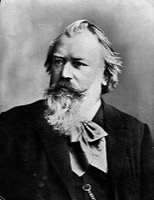
Johannes Brahms
Repertoire in dialogue1833–1897 · German Romantic
One of the greatest composers of German Romanticism, Brahms concludes his oeuvre with the "Eleven Chorale Preludes" op. 122 for organ, a musical testament of profound inner depth. These pieces reconnect with the great tradition of Lutheran chorales.
Prélude et Fugue en sol mineur (WoO 10) — Repertoire in dialogue

Camille Saint-Saëns
Repertoire in dialogue1835–1921 · French Romantic
Organist at the Madeleine in Paris and a musician of multiple talents, Saint-Saëns was an early virtuoso on the organ. His "Third Symphony" with organ and his pieces for solo organ demonstrate his mastery of the instrument.
Bénédiction nuptiale (Op. 9) — Repertoire in dialogue

Alexandre Guilmant
Repertoire in dialogue1837–1911 · French Symphonic
Organist of the Trinité in Paris and co-founder of the Schola Cantorum, Guilmant was an international concert performer and an indefatigable editor of ancient music. His eight sonatas for organ and orchestra bear witness to his mastery of the grand symphonic style.
Marche Funèbre et Chant Séraphique (Op. 17) — Repertoire in dialogue

Théodore Dubois
Repertoire in dialogue1837–1924 · French Romantic
Organist of La Madeleine in Paris and director of the Conservatoire, Théodore Dubois composed numerous organ pieces in a noble and measured style. His writing, clear and well-constructed, fits within the tradition of the French school.
Toccata en sol majeur — Repertoire in dialogue
Josef Rheinberger
Repertoire in dialogue1839–1901 · German Romantic
Munich-based organist and pedagogue of Liechtenstein origin, Rheinberger is the author of twenty sonatas for organ of robust and generous craftsmanship. His writing, enriched by classical and romantic influences, remains a pillar of the teaching repertoire.
Sonate No.8 en mi mineur (Op. 132) — Repertoire in dialogue

Charles-Marie Widor
Repertoire in dialogue1844–1937 · French Symphonic
Organist of Saint-Sulpice in Paris for 64 years, Widor is the author of ten symphonies for organ that brought the genre to its zenith. His famous "Toccata" from the Fifth Symphony is one of the most performed organ pieces in the world.
Symphonie No.5 - Adagio (Op. 42/1) — Repertoire in dialogue
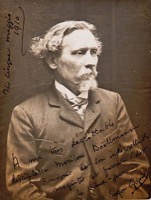
Eugène Gigout
Repertoire in dialogue1844–1925 · French Romantic
Organist at Saint-Augustin in Paris, a student of Saint-Saëns and professor at the Conservatoire, Gigout is the author of organ pieces of solid and elegant craftsmanship. His "Grand chœur dialogué" and his "Dix pièces" remain in the repertoire.
Scherzo — Repertoire in dialogue

Gabriel Fauré
Open repertoire1845–1924 · French Romantic
Organist at the Madeleine in Paris and master of French melody, Fauré left only a few pieces for the organ. His most significant contributions to the instrument come from transcriptions of his famous "Requiem."
Messe basse - Kyrie — Open repertoire
Léon Boëllmann
Repertoire in dialogue1862–1897 · French Romantic
Organist at Saint-Vincent-de-Paul in Paris, Boëllmann is chiefly renowned for his "Suite gothique" (1895), an emblematic work of the French Romantic repertoire. Died at 35 years old, he left behind a brief but generously inspired catalogue.
Suite Gothique - Introduction-Choral (Op. 25) — Repertoire in dialogue

Charles Tournemire
Repertoire in dialogue1870–1939 · French Mystical
Organist at Sainte-Clotilde in Paris and successor to Franck, Tournemire developed a mystical and visionary language based on Gregorian chant. His monumental "Orgue mystique," a cycle of 51 offices for the liturgical year, is a unique work in the repertoire.
L'Orgue Mystique - Cycle de Pâques (Op. 55) — Repertoire in dialogue
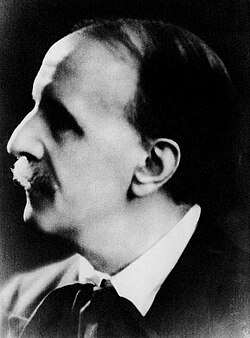
Louis Vierne
Repertoire in dialogue1870–1937 · French Symphonic
Organist of Notre-Dame de Paris for 37 years, Louis Vierne is the author of six symphonies for organ of visionary power. Blind from birth, he died at his console while giving a recital.
Symphonie No.1 - Finale (Op. 14) — Repertoire in dialogue

Max Reger
Repertoire in dialogue1873–1916 · German Post-Romantic
Last of the great German post-romantics, Max Reger composed for the organ a monumental corpus of extreme harmonic and contrapuntal complexity. His fantasias and fugues, chorales and sonatas bring Bach's legacy to its romantic culmination.
Introduction, Passacaille et Fugue en mi mineur (Op. 127) — Repertoire in dialogue
Henry Mulet
Core repertoire1878–1967 · French Symphonic
Organist at the Basilica of Notre-Dame de Fourvière in Lyon, Henry Mulet was a prominent figure in the Symphonique français style. His extensive catalog of organ works includes numerous compositions that exemplify the grandeur and expressiveness characteristic of this tradition. Mulet's contributions were significant in enriching the French organ repertoire during the early 20th century, influencing subsequent generations of organists and composers.
Symphonie gothique — Core repertoire

Marcel Dupré
Repertoire in dialogue1886–1971 · French Symphonic
Organist at Saint-Sulpice in Paris, successor to Widor, and director of the Conservatoire, Marcel Dupré was the greatest organ virtuoso of his time. A legendary improviser, he composed a vast repertoire including the "Chemin de la Croix" and the "Trois Préludes et Fugues" op. 7.
Prélude et Fugue en sol mineur (Op. 7/3) — Repertoire in dialogue
Pietro Yon
Repertoire in dialogue1886–1943 · Italian Modern
Pietro Yon, an Italian composer deeply rooted in the Modernist style, served as the organist at St. Patrick's Cathedral in New York City from 1920 until his death. His contributions to organ literature include numerous compositions that blend traditional elements with modern harmonies and techniques. Yon is remembered for expanding the expressive range of the organ, significantly influencing twentieth-century organ music.
Toccata and Fugue in D minor — Repertoire in dialogue
Maurice Duruflé
Open repertoire1902–1986 · French Neoclassical
Organist at Saint-Étienne-du-Mont in Paris, Duruflé is the author of a rare and finely wrought body of work deeply rooted in Gregorian chant. His "Suite" op. 5, his "Prélude et fugue sur le nom d'Alain," and his "Requiem" are masterpieces of timeless beauty.
Suite Op. 5 - Prélude (Op. 5) — Open repertoire
Flor Peeters
Repertoire in dialogue1903–1986 · Neoclassical
Organist of Malines Cathedral and influential pedagogue, the Belgian Flor Peeters composed a vast neo-classical organ work. His "Thirty-five Miniatures" and the instructive "Ars Organi" are widely disseminated worldwide.
Chorale Prelude on "Lobe den Herren" — Repertoire in dialogue
Jean Langlais
Repertoire in dialogue1907–1991 · French Modern
Organist at Sainte-Clotilde in Paris and blind from childhood, Jean Langlais composed a considerable body of organ works, inspired by Gregorian chant and Breton modality. His "Trois Poèmes évangéliques" and "Huit Chants de Bretagne" are notable examples thereof.
Suite Médiévale - Prélude — Repertoire in dialogue
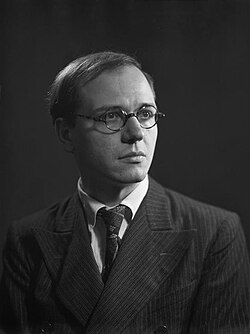
Olivier Messiaen
Open repertoire1908–1992 · French Modern
Organist at the Trinité in Paris for over sixty years, Messiaen is one of the most innovative composers of the twentieth century. His large-scale organ frescoes, from "L'Ascension" to "Le Livre du Saint Sacrement," blend Catholic faith, bird songs, and Hindu rhythms.
L'Ascension - Alléluias sereins — Open repertoire
Gaston Litaize
Open repertoire1909–1991 · French Modern
Organist at Saint-François-Xavier in Paris and blind, Gaston Litaize was a renowned interpreter and pedagogue. His organ works, characterized by luminous lyricism, include notably the "Vingt-quatre Préludes liturgiques" and the "Messe de la Toussaint."
Prélude et Danse Fuguée — Open repertoire
Jean-Jacques Grunenwald
Open repertoire1911–1982 · French Modern
Organist at Saint-Augustin in Paris and composer, Grunenwald was a student of Dupré and a representative of French modernity at the organ. His writing, influenced by Messiaen and Duruflé, explores bold sonorities.
Prélude et Fugue — Open repertoire

Jehan Alain
Repertoire in dialogue1911–1940 · French Modern
Died in combat at 29 years old, Jehan Alain left a dazzling, visionary, and poetic organ oeuvre. His "Litanies," his "Trois Danses," and his "Deux Danses à Agni Yavishta" count among the most original pages of the twentieth century.
Le Jardin Suspendu — Repertoire in dialogue
Petr Eben
Open repertoire1929–2007 · Contemporary
Czech composer profoundly marked by his Catholic faith and the experience of totalitarian regimes, Petr Eben composed powerful and committed works for the organ. His cycle "Job" and his "Biblical Windows" bear witness to an intense spirituality and an original language.
Moto Ostinato (Sonntagsmusik) — Open repertoire
Jean Guillou
Open repertoire1930–2019 · Contemporary
Organist of Saint-Eustache in Paris from 1963 to 2015, Jean Guillou was a visionary interpreter and an unparalleled improviser. Composer of an extensive catalog and theorist of the organ, he advocated for an orchestral and monumental conception of the instrument.
Toccata (Op. 9) — Open repertoire
Naji Hakim
Open repertoire1955–... · Contemporary
French-Lebanese organist and international recognized composer and improvisor, holder of the position at La Trinité in Paris following Messiaen, Naji Hakim's work for the organ is rich and colorful, blending Eastern influences with the French symphonic tradition.
The Embrace of Fire — Open repertoire
An artistic and educational approach
This classification reflects the artistic and educational orientations of the Chaumes-en-Brie project.
It demonstrates a broad cultural ambition, embracing five centuries of organ music, from the 16th to the 21st century, with particular attention to the French classical heritage — at the heart of the Couperin legacy.
The characteristics of the instrument will be defined with the organ builder selected through the public tender process.
An instrument in the service of the repertoire
From Couperin to Bach, from Frescobaldi to Franck: support the construction of an organ designed for five centuries of music.