The Chaumes-en-Brie organ · key axis of the project
The Resonance manual
The expressive heart of the instrument: depth, support, colour.
The Resonance manual is a sound plane conceived not as a mere dynamic reinforcement, but as an autonomous space of resonance, intended to enrich the depth, continuity and colour of the whole instrument.
Also known as a “bass manual” in certain Mediterranean organs, this sound plane is designed to fulfil a central function. Its final form will be developed with the organ builder selected through the consultation; its musical role is one of the key axes of the programme.
Where it stands
What it is not, what it is
- Not an Echo manual
- in the strict sense
- Not an expressive device
- in the Romantic sense
An intermediate sound plane, designed to dialogue with the other manuals and to support the overall musical architecture.
Its musical role
Depth, support, colour
The Resonance manual provides harmonic depth, supports the other sound planes, and offers an extended palette of colours. Usable through pedal coupling, it enriches the pedal and contributes to the overall cohesion.
The musical programme envisions registers that confer gravity to the instrument, as well as récit capability.
- Rich harmonic foundation
- Extended palette of colours
- Dialogues with the Great and Positive
- Pedal support, through coupling
A rare orientation in contemporary French organ building, designed for dialogue and musical experience.
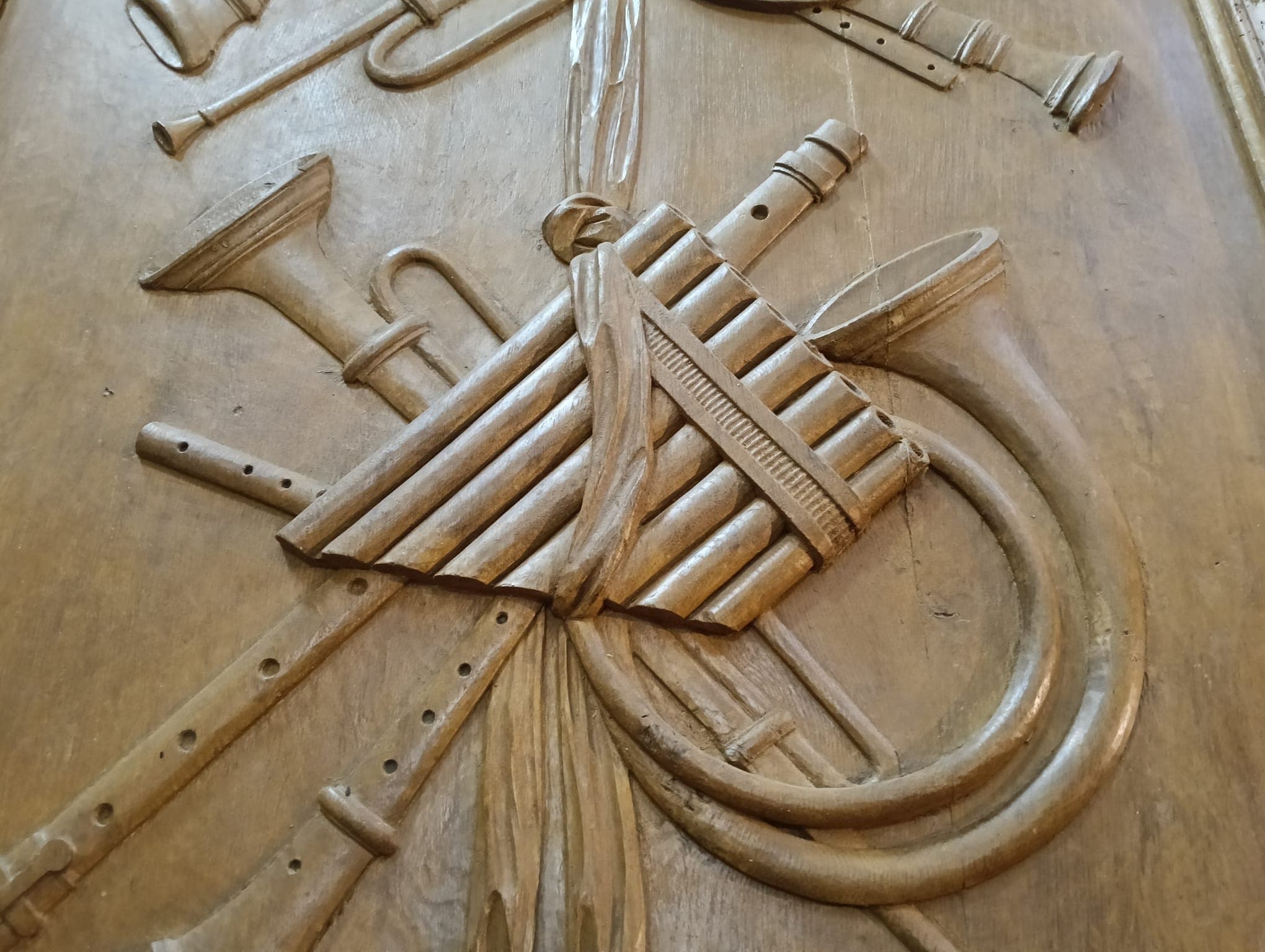
Historical lineage
An old concern, reinterpreted
Such a sound plane belongs to a long-standing reflection on spatialisation, depth and the perspective of sound in organ building. While contemporary instruments explicitly including a Resonance manual are rare, the principles it draws on have counterparts in historical practices that sought to enrich sound projection and polyphonic clarity.
The choice of this device is therefore not an isolated innovation, but a controlled reinterpretation of old concerns, adapted to present-day uses and requirements.
Technical and acoustic stakes
Four design requirements
Building a Resonance manual raises several specific issues.
A balanced articulation with the other sound planes
Coherent acoustic diffusion within the building
Control of dynamic and tonal balance
A musical function that is clear to the performer
These call for careful design, combining musical thinking, appropriate technical choices and close attention to the acoustics of the place. No standard solution is envisaged at this stage.
Design framework
A device that will not be fixed too early
The design of the Resonance manual follows a gradual process, based on:
- the study of relevant existing instruments
- the analysis of practical experience
- in-depth exchanges between musicians, organ builders and experts
The principles adopted will be validated step by step, in line with the acoustic studies and the recommendations of the heritage authorities. The project does not intend to fix this device before that consultation is complete.
Documented to be passed on
The Resonance manual will be covered by detailed technical documentation describing how it works, how it interacts with the other sound planes and how it is maintained. Its aims are:
- an understanding of the device by organ builders who may work on it later
- maintenance and regulation over the long term
- the transmission of the choices made, beyond the people involved in the initial design
The Resonance manual is not an isolated or demonstrative feature.
It belongs fully to the overall logic of the instrument, conceived as a tool for practice, transmission and in-depth musical work. It contributes to the organ’s tonal identity while remaining subordinate to the project’s fundamental principles: clarity, balance, durability and respect for the place.