Romantic · Swedish
Emil Sjögren
1853 to 1918
Swedish Romantic
Repertoire in dialogue
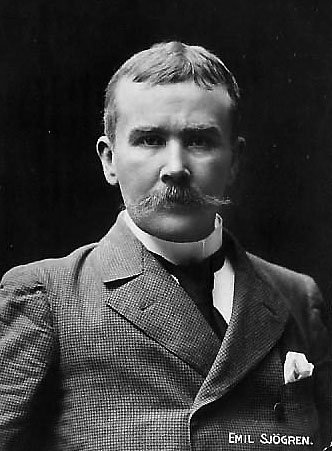
Image: Photographe inconnu, Wikimedia Commons, domaine public
Born in Stockholm, Emil Sjögren studied at the Stockholm Conservatory and then in Berlin in 1879–1880 with Friedrich Kiel and the organist August Haupt. Organist of the French Reformed Church in Stockholm from 1881, he was appointed to St John’s Church (S:t Johannes) in 1890 or 1891, depending on the source, and remained there until the end of his life. Best known for his songs and violin sonatas, he left for the organ three preludes and fugues and twenty-four Legends; Guilmant gave the first performance of the second prelude and fugue in Paris in 1907.
The repertoire
Works in the project’s repertoire
3 works.
Repertoire in dialogue
Flagship work
Legender (24 Légendes), op. 46
Op. 46 · Collection
Intimate piece, well served by the expressive Résonance manual
Preludium och fuga nr 1 en sol mineur, op. 4
Op. 4 · Prelude and Fugue
Keyboard compass; expression via the Résonance manual
Preludium och fuga nr 2 en la mineur, op. 49
Op. 49 · Prelude and Fugue
Keyboard compass; expression via the Résonance manual
This classification reflects the place of these repertoires within the artistic and educational orientations of the project. It does not constitute a technical indication regarding the design of the instrument.
The sources
Digitised collections
Early editions and manuscripts containing works by this composer, digitised by libraries and available in full.
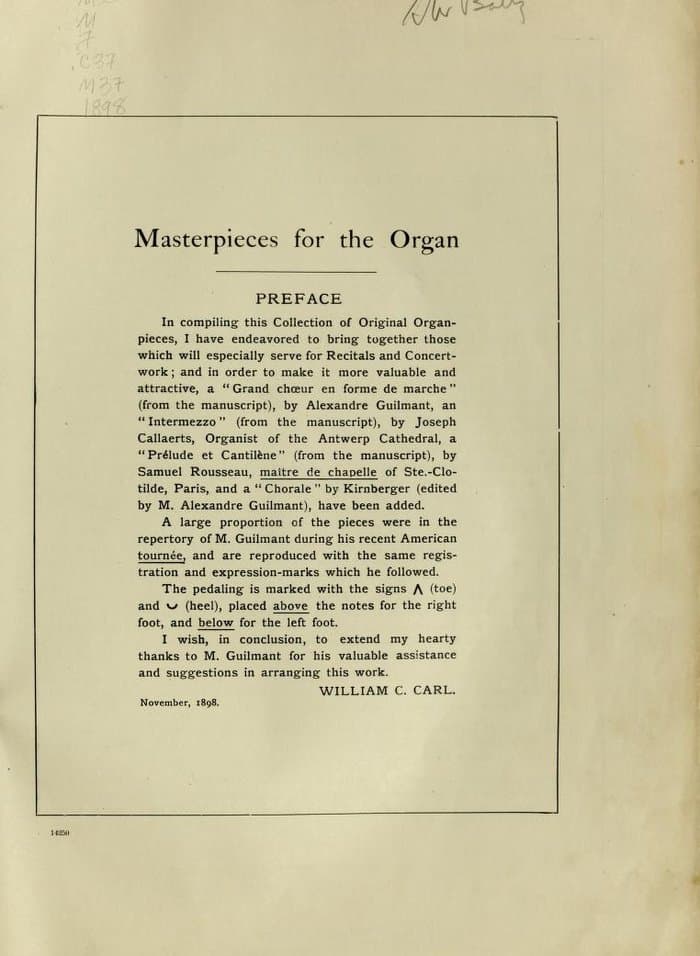
Master-pieces for the organ: twenty-one organ works selected chiefly from the programs of Alexandre Guilmant (ed. William C. Carl)
New York, G. Schirmer, 1898
Copy: Brigham Young University, Harold B. Lee Library, via Internet Archive
Take part
This organ will be able to serve this music.