Baroque · German
Franz Tunder
1614 to 1667
North German Baroque
Repertoire in dialogue
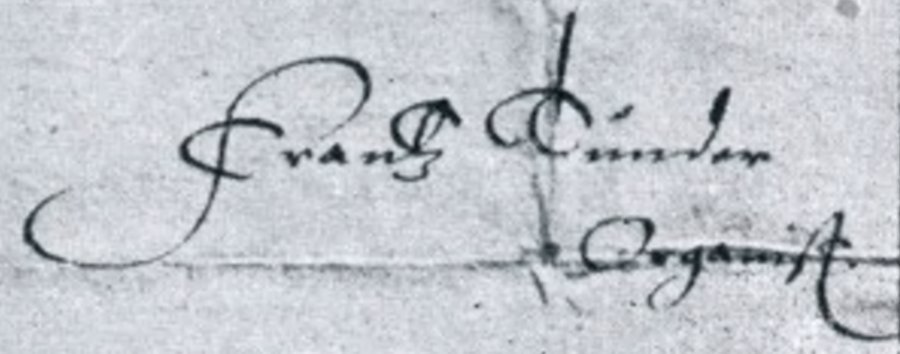
Image: Ярославко, CC BY-SA 4.0, via Wikimedia Commons
Court organist at Gottorf from 1632 to 1641, then organist of the Marienkirche in Lübeck until his death, Franz Tunder is one of the leading representatives of the North German organ school; Mattheson described him as a pupil of Frescobaldi, which current research doubts. In Lübeck he began the tradition of the Abendmusiken, free concerts financed by the town’s merchants. His surviving organ works, preludes, a canzona and chorale fantasias, foreshadow the art of Buxtehude, his successor, who married his daughter Anna Margarethe.
The repertoire
Works in the project’s repertoire
6 works, all available to listen to.
Repertoire in dialogue
Flagship work
Fantaisie chorale : Komm, Heiliger Geist, Herre Gott
Chorale fantasia
Expressive chorale fantasia, the Cornet and récit reeds can carry the cantus firmus with brilliance
Canzona en sol majeur
Canzona
Venetian-influenced piece, the Cromorne and detail stops suit the light character of the canzona
Fantaisie chorale : Christ lag in Todesbanden
Chorale fantasia
Dramatic Easter chorale, registration contrasts between French manuals enrich the interpretation
Fantaisie chorale : Jesus Christus, unser Heiland
Chorale fantasia
Dense contrapuntal writing, the Plein jeu and foundation stops of a French organ offer the required transparency
This classification reflects the place of these repertoires within the artistic and educational orientations of the project. It does not constitute a technical indication regarding the design of the instrument.
Take part
This organ will be able to serve this music.