Baroque · German
Georg Friedrich Händel
1685 to 1759
German Baroque
Repertoire in dialogue
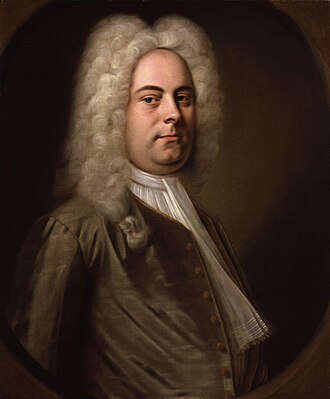
A pupil of Friedrich Wilhelm Zachow in Halle, where he served for a year as cathedral organist (1702), Handel went on to Hamburg and Italy before settling in London in 1712, becoming a British subject in 1727. A virtuoso on organ and harpsichord, he created the genre of the organ concerto, which he played himself between the acts of his operas and oratorios: his concertos Op. 4 and Op. 7 remain central to the repertoire.
The repertoire
Works in the project’s repertoire
6 works, all available to listen to.
Repertoire in dialogue
Flagship work
Concerto pour orgue en fa majeur, op. 4 n° 4
HWV 292 · Concerto
Organ concerto: orchestra (or reduction) required
Flagship work
Concerto pour orgue en si bémol majeur, op. 7 n° 1
HWV 306 · Concerto · Early edition
Organ concerto: orchestra (or reduction) required
Concerto pour orgue en fa majeur, op. 4 n° 5
HWV 293 · Concerto
Organ concerto: orchestra (or reduction) required
Concerto pour orgue en si bémol majeur, op. 4 n° 2
HWV 290 · Concerto
Organ concerto: orchestra (or reduction) required
Concerto pour orgue en sol mineur, op. 4 n° 1
HWV 289 · Concerto
Organ concerto: orchestra (or reduction) required
Concerto pour orgue en sol mineur, op. 7 n° 5
HWV 310 · Concerto · Early edition
Organ concerto: orchestra (or reduction) required
This classification reflects the place of these repertoires within the artistic and educational orientations of the project. It does not constitute a technical indication regarding the design of the instrument.
The sources
Digitised collections
Early editions and manuscripts containing works by this composer, digitised by libraries and available in full.
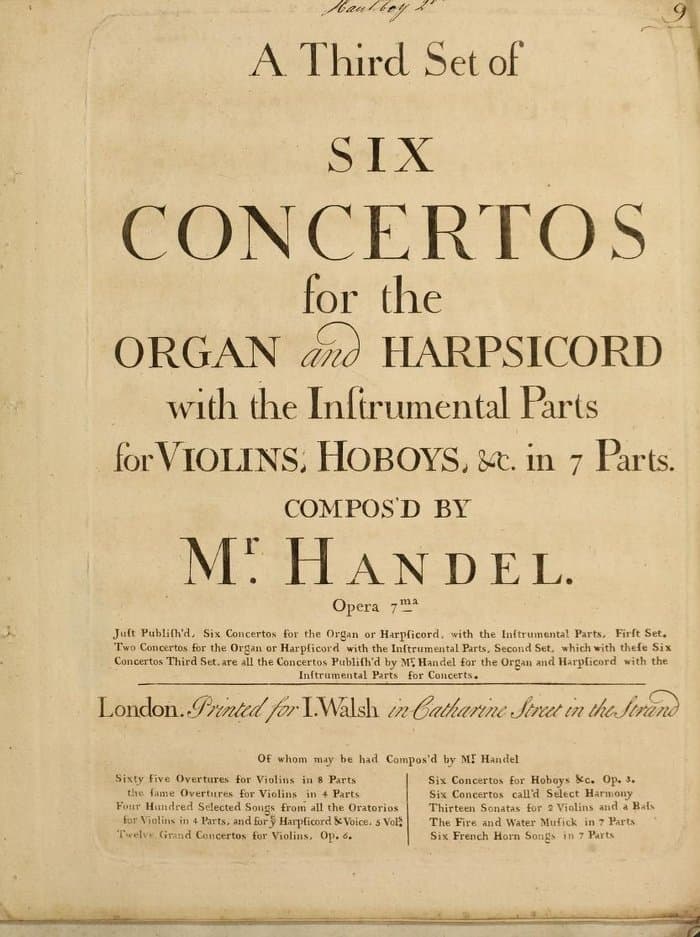
A third set of six concertos for the organ and harpsicord, op. 7
London, I. Walsh, 1761
Copy: University of Western Ontario, via Internet Archive
Take part
This organ will be able to serve this music.