Baroque · Austrian
Georg Muffat
1653 to 1704
German Baroque
Repertoire in dialogue
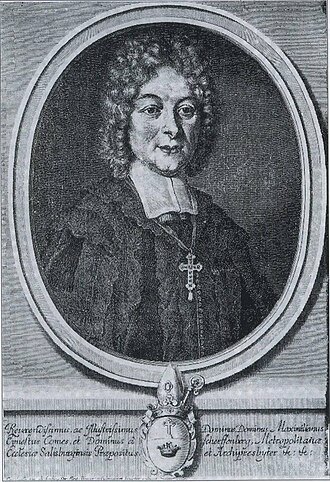
Born in Savoy, Georg Muffat trained in Paris (1663-1669) in the style of Lully, then in Rome with Pasquini, where he befriended Corelli; cathedral organist in Salzburg and then Kapellmeister to the Prince-Bishop of Passau, he achieved a synthesis of French, Italian, and German styles. His "Apparatus musico-organisticus" (1690), presented to Emperor Leopold I, comprises twelve toccatas, a ciacona, a passacaglia, and a set of variations; it is one of the most significant organ collections before those of Bach.
The repertoire
Works in the project’s repertoire
5 works, all available to listen to.
Repertoire in dialogue
Flagship work
Apparatus musico-organisticus — Ciacona
Ciacona
Major ciacona in the Italian style of Pasquini, French foundations and reeds allow for color variations
Flagship work
Apparatus musico-organisticus — Passacaglia
Passacaglia
French-influenced passacaglia, the form and spirit are close to the French tradition — best compatibility in the collection
This classification reflects the place of these repertoires within the artistic and educational orientations of the project. It does not constitute a technical indication regarding the design of the instrument.
Take part
This organ will be able to serve this music.