Baroque · French
Jacques Thomelin
around 1635 to 1693
French Classical
Core repertoire
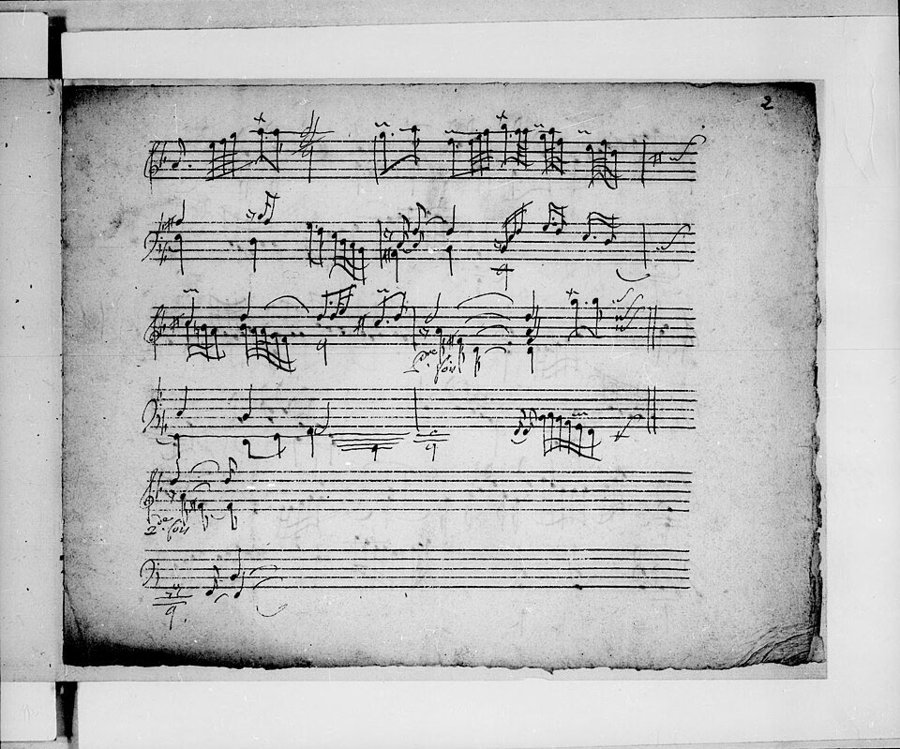
Image: BnF (Gallica btv1b108618880), Wikimedia Commons, domaine public
Organist of Saint-André-des-Arts and of the Carmelites of the Place Maubert, then of Saint-Jacques-de-la-Boucherie from 1669, Jacques-Denis Thomelin won one of the four quarterly posts of organist of the Chapelle Royale in 1678. He was the teacher of the young François Couperin, who succeeded him at the Chapelle Royale in December 1693. His organ pieces survive in manuscripts in the Bibliothèque Sainte-Geneviève.
Wikipedia Scores on IMSLP Report an error
Organ loftsChapelle royale
The repertoire
Works in the project’s repertoire
4 works, 2 of them available to listen to.
Core repertoire
This classification reflects the place of these repertoires within the artistic and educational orientations of the project. It does not constitute a technical indication regarding the design of the instrument.
Biography
Life and organ music
Jacques-Denis Thomelin was born in Paris around 1635. Organist of Saint-André-des-Arts and of the Carmelites of the Place Maubert, then of Saint-Jacques-de-la-Boucherie, where crowds came to hear him, he became in 1678 one of the four organists of the Chapelle Royale. He was the teacher of the young François Couperin, who succeeded him in the King’s service in December 1693. No work was published under his name: the organ pieces ascribed to him today come from anonymous manuscripts, attributed to him by their editor.
Key dates
- c. 1635
- Born in Paris (1640? according to the BnF)
- 1653
- Organist of Saint-André-des-Arts and of the Carmelites of the Place Maubert
- 10 November 1653
- Marriage to Hélène Dumelin
- 22 June 1669
- Agreement for the organ of Saint-Jacques-de-la-Boucherie
- 1678
- Organist of the Chapelle Royale, January quarter
- 1679–1685
- Lessons to the young François Couperin
- 28 October 1693
- Death in Paris
- 26 December 1693
- François Couperin succeeds him at the Chapelle Royale
A family of writing masters
He is also called Jacques or Alexandre-Jacques-Denis; late in life he signed Alexandre, A. J. or A. J. D. The Wikipedia articles place his birth around 1635, the BnF in 1640, with a question mark. His father, Jacques, was a master writer and bourgeois de Paris, probably of Brie stock, like the Couperins. His marriage to Marie Balestel produced four children; Jacques-Denis was the second. His elder brother, Guillaume, became a master writer like their father and an organist like him.
On 10 November 1653 Jacques-Denis married Hélène Dumelin, daughter of a Parisian goldsmith, who brought him a dowry of 2,400 livres. They had two daughters, Marie-Madeleine and Éléonore.
From Saint-André-des-Arts to Saint-Jacques-de-la-Boucherie
His training is unknown. From 1653 he was organist of Saint-André-des-Arts, until June 1669, and of the Carmelites of the Place Maubert, a post he kept until his death and in which his brother Guillaume occasionally deputised for him. The articles add that in 1667 he became the first titular of the new organ “of this church”, just completed by the sons of the builder Pierre Thierry, and kept it until 1685, when he handed it on to his pupil Tassin; they do not make it certain which church is meant.
In 1669, on the death of Étienne Richard, he obtained the organ of Saint-Jacques-de-la-Boucherie. The agreement made with the churchwardens on 22 June 1669 gave him 400 livres in wages, of which 200 were withheld as rent for a house belonging to the parish in the Rue des Lombards. Titon du Tillet, in 1732, reports that “all lovers of music went in great crowds to hear him on high feast days”, above all on the eve and the day of the church’s patron saint. Not everyone liked his playing: Le Gallois wrote in 1680 “that he made a great deal of noise”, and the chapter reproached him for the length of his playing, which “wearies and tires both clergy and parishioners”, asking him to conform to the ceremonial of the Church of Paris, which requires organ playing to be “neither long nor hurried”. Bouvet dates this reprimand to 1685.
Organist to the King and teacher of Couperin
The 1670s brought him renown: he was called upon several times to examine organs. In 1678 he entered the competition held to replace Joseph Chabanceau de La Barre at the Chapelle Royale; he won and took the January quarter, Jean-Baptiste Buterne, Guillaume-Gabriel Nivers and Nicolas Lebègue sharing the other three. The articles on Thomelin, Nivers and Lebègue place the division of the post into four quarters at this competition; the French Wikipedia article on the Chapelle Royale dates it to 1693. In April 1683 he sat on the jury of the competition for the sub-masters of the Chapelle.
A close friend of Charles Couperin according to Bouvet, he gave lessons to his son François between 1679 and 1685. Titon du Tillet writes that the boy, who had lost his father at ten, found in him “a second father, who took pleasure in perfecting him on the organ and the harpsichord, and in composition”.
The succession
Thomelin died in Paris on 28 October 1693, four days after making his will, and was buried at Saint-Jacques-de-la-Boucherie. He left 3,000 livres in cash and musical manuscripts, which went to his widow; after quarrels with her elder daughter, she was to claim from her music papers that have never resurfaced. At Saint-Jacques as at the Carmelites, he had designated his nephew Louis-Jacques, Guillaume’s son, to replace him. At the Chapelle Royale the King heard several organists; the warrant of 26 December 1693, published by Bouvet, chose François Couperin for the post “vacant by the death of Jacques Thomelin”, in the January quarter. The Mémoires of Sourches, under 27 December, speak of seven organists heard and of a choice made known three days later.
A body of work recovered by attribution
Titon du Tillet credited him with “a few manuscript pieces for the organ, and above all for the harpsichord, which well deserve to be engraved”. A privilege dated 6 February 1698 authorised the printing of “an organ book composed by the late Thomelin”, in the name of a “Sr Thomelin” describing himself as his son, although the articles record only daughters; the book, if it ever appeared, is lost.
The organ pieces gathered under his name by Nicolas Gorenstein in 2006, a Pange lingua, five verses of Ave maris stella, duos, trios, récits and preludes, come from three anonymous manuscripts in the Bibliothèque Sainte-Geneviève, which the editor regards as pupils’ notebooks from the last quarter of the 17th century, also containing pieces by Chambonnières, Louis Couperin and Étienne Richard. The attribution rests on one feature: some pieces call for a voix humaine in the pedal, a stop found, among few French instruments, on the organs of Saint-Jacques-de-la-Boucherie and Saint-André-des-Arts. The sources do not always agree on shelfmarks: the French article places the Ave maris stella in manuscript 2353, IMSLP in manuscript 2348.
Sources
- Wikipedia (French), “Jacques Thomelin”, consulted November 2026
- Wikipedia (English), “Jacques Thomelin”, consulted November 2026
- Wikipedia (French), “Chapelle royale (Ancien Régime)”, consulted November 2026
- Évrard Titon du Tillet, Le Parnasse françois, Paris, 1732, with its first supplement (Internet Archive)
- Charles Bouvet, Une dynastie de musiciens français : les Couperin, organistes de l’église Saint-Gervais, Paris, Delagrave, 1919, pp. 82–84 (Internet Archive)
- IMSLP, “Ave maris stella for organ (Thomelin, Jacques-Denis)”, consulted November 2026
- Bibliothèque nationale de France, authority record “Thomelin, Jacques-Denis (1640?-1693)”
Take part
This organ will be able to serve this music.