Classical · French
Armand-Louis Couperin
1727 to 1789
French Classical
Repertoire in dialogue
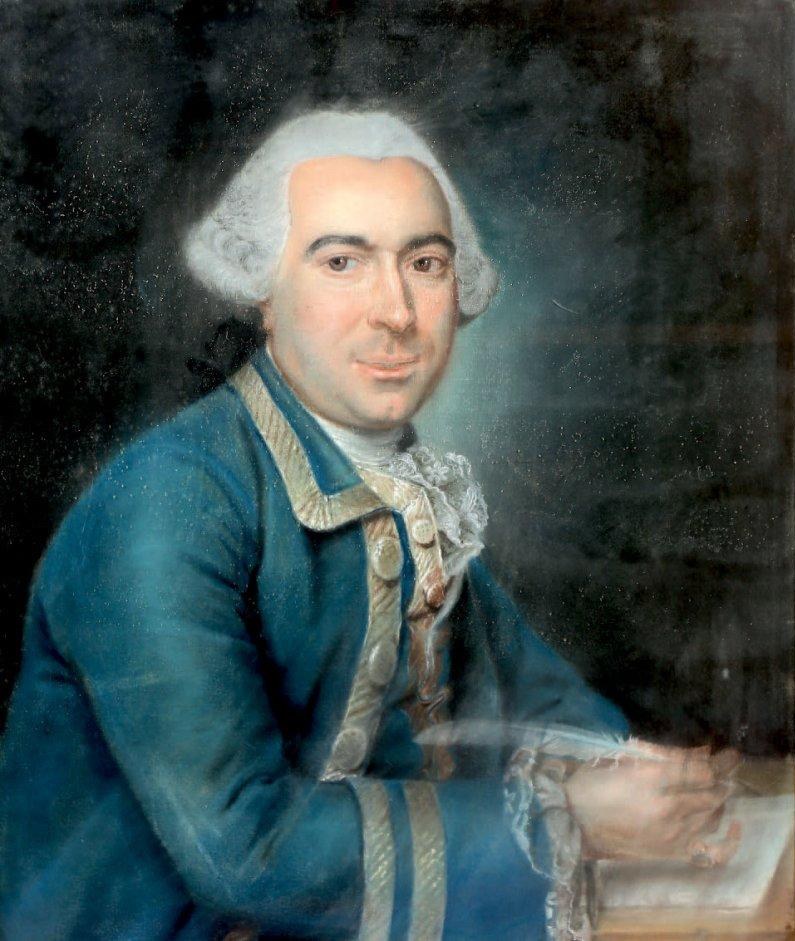
Son of Nicolas Couperin, a first cousin of François ’le Grand’, Armand-Louis Couperin inherited the post of organist of Saint-Gervais in 1748, at the age of 21. A virtuoso praised by his contemporaries, including Charles Burney, he held many Parisian posts, including a quarter at Notre-Dame, the Sainte-Chapelle and the Royal Chapel. He died after being knocked down by a runaway horse on his way from the Sainte-Chapelle to Saint-Gervais.
Wikipedia Scores on IMSLP In the Couperin family tree Report an error
Organ loftsSaint-Gervais-Saint-Protais, Notre-Dame Cathedral, Chapelle royale
The repertoire
Works in the project’s repertoire
2 works, all available to listen to.
Repertoire in dialogue
Dialogue entre le chalumeau et le basson
French Classical
Calls for chalumeau and basson stops, rendered on neighbouring reeds
This classification reflects the place of these repertoires within the artistic and educational orientations of the project. It does not constitute a technical indication regarding the design of the instrument.
Biography
Life and organ music
Armand-Louis Couperin was born in Paris on 25 February 1727. The son of Nicolas Couperin, first cousin of François le Grand, he inherited the organ of Saint-Gervais in 1748 and became one of the most renowned organists in Paris in the second half of the 18th century. His contemporaries praised above all his improvisations; for the organ he left very few written pages.
Key dates
- 25 February 1727
- Born in Paris
- 1748
- Succeeds his father Nicolas at Saint-Gervais
- 1752
- Marriage to Élisabeth-Antoinette Blanchet
- 1755
- One of the four organists of Notre-Dame
- 1760
- Organist of the Sainte-Chapelle
- 16 April 1768
- Acceptance of the Saint-Gervais organ rebuilt by Clicquot
- 1770
- Organist to the King; Burney hears him at Saint-Gervais
- 2 February 1789
- Death in Paris after an accident
The heir of Saint-Gervais
His mother, Françoise Dufour de la Coste, died when he was seventeen months old, and he was brought up by his father. Nothing is known of his training. His year of birth has varied from author to author, 1725 in Jal, 1721 in Fétis; Bouvet settled on 1727 from his burial record, which gives his age as sixty-two, and this is the date given by the Bibliothèque nationale de France.
Nicolas Couperin died intestate in 1748: Armand-Louis, then twenty-one, inherited his property and his organ loft. In 1752 he married Élisabeth-Antoinette Blanchet, daughter of François-Étienne Blanchet, harpsichord maker to the court. She was herself an organist; a writer quoted by Bouvet claims that she stood in for her husband “without the connoisseurs noticing”. Three of their children became musicians, Pierre-Louis, Gervais-François and Antoinette-Victoire; the reference works hesitate between three and four children in all.
A plurality of posts
Like his forebears, he held several posts at once. Besides Saint-Gervais, he played the organ of Saint-Barthélemy, Saint-Jean-en-Grève, the Carmes-Billettes, Sainte-Marguerite and, according to Bouvet, Saint-Merry. He was one of the four organists of Notre-Dame from 1755, organist of the Sainte-Chapelle from 1760 and organist to the King from 1770. He could not serve all these churches alone: his wife and sons deputised for him.
It was during his tenure that the organ of Saint-Gervais was entirely rebuilt. According to Bouvet, the work was begun in 1760 by Louis Bessart; on his death in 1764 François-Henri Clicquot took it over, and the instrument was accepted on 16 April 1768 by Daquin and Balbastre. Bouvet presumes that the work was carried out on Armand-Louis’s advice. The articles on the church date Clicquot’s work to 1766–1768 or to 1769. This organ, which retains stops from the 17th century, is still in place. Armand-Louis was also, with Balbastre, Séjan and Charpentier, one of the four assessors at the acceptance of the Notre-Dame organ rebuilt by Clicquot.
The verdict of his contemporaries
The Englishman Charles Burney heard him at Saint-Gervais on 18 June 1770, the eve of the patronal feast. In the account of his journey, as rendered by the French edition quoted by Bouvet, he praises the taste with which Couperin accompanied the Te Deum and his fingering, describes him as “brilliant in his execution, varied in his melody, and accomplished in his modulations”, and notes that he played passages with both hands in the treble while the pedals took the bass. He adds that his taste “is not as modern as it might be”. That day Burney met Balbastre, who then took him to Couperin’s house: the two organists were friends.
He composed little and published even less. He refused to write for the theatre and did not have his church music printed; of his motets only a motet for the Blessed Sacrament, dated 1787, survives. His Pièces de clavecin of 1751, dedicated to Madame Victoire, his sonatas and his Simphonie de clavecins, which requires two instruments fitted with knee-levers, show his interest in the resources of keyboard instruments. For the organ, the French article counts two pieces, the English article only one; La Chasse and the Dialogue entre le chalumeau et le basson, of 1775, are written for harpsichord or organ.
An accidental death
On Sunday 1 February 1789, at about five in the afternoon, he was knocked down at the Port-au-Blé by a runaway horse that had thrown its rider; struck on the head, he died the next day without uttering a word. An old note published by Bouvet states that he was returning from first Vespers of the Purification at the Sainte-Chapelle; the abbé de Feller writes that he was returning from Notre-Dame. He was buried on 4 February at Saint-Gervais, in the chapel of Providence.
He left 885 books, a rare library for a musician, and at home an organ, a regal, harpsichords, spinets, a clavichord and a pianoforte. His elder son Pierre-Louis, who had received the survivance of Saint-Gervais, died on 10 October of the same year; the organ loft then passed to Gervais-François.
Sources
- Wikipedia (French), “Armand-Louis Couperin”, consulted November 2026
- Wikipedia (English), “Armand-Louis Couperin”, consulted November 2026
- Wikipedia (German), “Armand-Louis Couperin”, consulted November 2026
- Charles Bouvet, Une dynastie de musiciens français : les Couperin, organistes de l’église Saint-Gervais, Paris, Delagrave, 1919 (Internet Archive)
- Bibliothèque nationale de France, authority record “Couperin, Armand-Louis (1727-1789)”
- Wikipedia (French), “Grand orgue de Notre-Dame de Paris”, list of organists, consulted November 2026
- Wikipedia (French), “Église Saint-Gervais-Saint-Protais de Paris”, consulted November 2026
Take part
This organ will be able to serve this music.