Baroque · French
Jean-Henri d'Anglebert
1629 to 1691
French Classical
Core repertoire
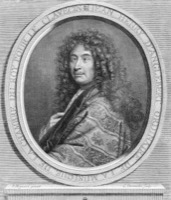
Harpsichordist of the king’s chamber and Chambonnières’s successor in that post, d’Anglebert was one of the greatest masters of the French keyboard. His organ pieces, though few in number, include five fugues of remarkable contrapuntal density.
The repertoire
Works in the project’s repertoire
3 works, all available to listen to.
Core repertoire
This classification reflects the place of these repertoires within the artistic and educational orientations of the project. It does not constitute a technical indication regarding the design of the instrument.
Biography
Life and organ music
Jean-Henri d’Anglebert was baptised in Bar-le-Duc on 1 April 1629. Organist of the Jacobins in the Rue Saint-Honoré, musician to Monsieur, the King’s brother, and then harpsichordist of Louis XIV’s chamber in succession to Chambonnières, he was first and foremost a master of the harpsichord. Yet his book of 1689 contains, alongside the suites and the transcriptions of Lully, the bulk of his organ music: five fugues on one subject and a quatuor on the Kyrie.
Key dates
- 1 April 1629
- Baptised in Bar-le-Duc (1628 according to the BnF)
- 11 October 1659
- Marriage contract with Madeleine Champagne
- January 1660
- Organist of the Jacobins, Rue Saint-Honoré
- August 1660
- Succeeds Henry Du Mont in the service of Philippe d’Orléans
- 1662
- Takes over Chambonnières’s post (1663 or 1664 according to the French article)
- 1674
- His son Jean-Baptiste-Henry obtains the reversion
- 1689
- Pièces de clavecin, with five fugues and a quatuor for organ
- 23 April 1691
- Death in Paris
From Bar-le-Duc to Paris
His father, Claude Henry, known as Anglebert, was a prosperous master shoemaker of Bar-le-Duc, in the Duchy of Bar. The family’s true surname was Henry: Jean Henry gradually became Jean-Henry d’Anglebert. His date of birth is disputed: the French Wikipedia article and Musicologie.org give 1 April 1629, which the English article takes to be the date of baptism; the BnF has 1628, and Charles Bouvet, in 1919, inferred 1635 from the age he gave at his marriage.
Nothing is known of his training or of his arrival in Paris. The earliest manuscript containing his pieces, copied between 1650 and 1659, also includes works by Louis Couperin and Chambonnières: he was probably already moving in the circle of the great harpsichordists. The French article calls him a disciple of Chambonnières; the English article sees this only as a possibility, since his Tombeau de M. de Chambonnières might equally honour a friend. On 11 October 1659, the date of the contract cited by the English article, he married Madeleine Champagne, sister-in-law of the goldsmith and organist François Roberday; Bouvet places the wedding on the 12th, at Saint-Germain-l’Auxerrois. He was then described as a bourgeois de Paris.
The organist
His Paris career began at the organ of the church of the Jacobins in the Rue Saint-Honoré, which he still held in January 1660; according to Musicologie.org he was organist there when Étienne Enocq installed a new organ. The French article keeps him there until 1662. In August 1660 he succeeded Henry Du Mont in the service of Philippe d’Orléans, the King’s brother, and kept the post at least until 1668; the English article and Musicologie.org describe it as a harpsichordist’s post, the French article and Bouvet as an organist’s post, which Bouvet documents on 26 March 1662.
His name also appears in the first organ book printed in France since Titelouze: Roberday, in the preface to his Fugues et caprices of 1660, lists him among the musicians who gave him a fugue subject.
Harpsichordist of the King’s chamber
In 1662 according to the English article, in 1663 or 1664 according to the French, he took over the post of harpsichordist of the King’s chamber held by Chambonnières, then in disgrace: the latter kept the salary, d’Anglebert performed the duties. In 1664 the baptismal record of his son François describes him as ordinaire de la musique de la chambre du roi pour le clavecin. Lully, his colleague and friend, was godfather to his eldest son, Jean-Baptiste-Henry, born on 5 September 1661 according to Bouvet, whereas Musicologie.org dates this sponsorship to 1662; this son obtained the reversion of the post in 1674. After 1679 d’Anglebert served the Dauphine, Maria Anna Victoria of Bavaria, who died in 1690. He died in Paris on 23 April 1691.
His Pièces de clavecin, his only printed work, appeared in 1689, dedicated to the Princesse de Conti. Four suites stand alongside transcriptions of works by Lully, a very full table of ornaments, which Bach copied around 1710, and principles of accompaniment. His portrait engraved by Vermeulen after Mignard shows a pronounced squint.
Five fugues and a quatuor
The same book of 1689 contains his organ pieces: five fugues on one subject, which the French article says he wrote in his youth, and a quatuor on the Kyrie. This is the account of the French article, Musicologie.org and IMSLP; the English article states instead that these pieces have come down to us in manuscript. They are the only organ works by him that survive.
Each of the fugues treats a variant of the same subject, in a different movement, so that the set forms a kind of extended ricercare, a miniature Art of Fugue in the words of the English article. The quatuor, an old term for a four-voice contrapuntal organ piece, is one of the few of its kind to survive: it is built on three themes taken from the Kyrie of the Mass Cunctipotens and is played on three manuals and pedal. Alexandre Guilmant republished the fugues and the quatuor in 1902 in his École classique de l’orgue. Historians’ verdicts have varied: André Pirro, and Norbert Dufourcq after him, were unconvinced by his pieces; Manfred Bukofzer, on the contrary, stressed his contribution to the suite and to harpsichord technique.
Sources
- Wikipedia (French), “Jean-Henri d’Anglebert”, consulted November 2026
- Wikipedia (English), “Jean-Henri d’Anglebert”, consulted November 2026
- Jean-Marc Warszawski, “Anglebert Jean Henri d’ (1629-1691)”, Musicologie.org
- IMSLP, “5 Fugues et un Quatuor sur le Kyrie (D’Anglebert, Jean-Henri)”, consulted November 2026
- Charles Bouvet, Une dynastie de musiciens français : les Couperin, organistes de l’église Saint-Gervais, Paris, Delagrave, 1919, pp. 28–29 and note IV “Les d’Anglebert”, pp. 290–292 (Internet Archive)
- Bibliothèque nationale de France, authority record “Anglebert, Jean-Henri d’ (1628-1691)”
Take part
This organ will be able to serve this music.