Baroque · French
Nicolas de Grigny
1672 to 1703
French Classical
Core repertoire
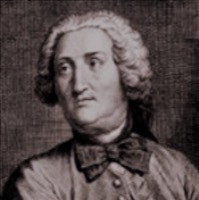
Organist of Reims Cathedral, Nicolas de Grigny is the author of a single "Livre d’orgue" (1699) of such perfection that J. S. Bach made a complete manuscript copy of it. His writing combines French tradition with a remarkable harmonic depth.
The repertoire
Works in the project’s repertoire
16 works, all available to listen to.
Core repertoire
This classification reflects the place of these repertoires within the artistic and educational orientations of the project. It does not constitute a technical indication regarding the design of the instrument.
Biography
Life and organ music
Nicolas de Grigny was baptised in Reims on 8 September 1672 and died in the same city on 30 November 1703, at the age of thirty-one. Organist of Reims Cathedral, he left only one collection for the organ, the Premier livre d’orgue published in 1699: a mass and five hymns. Johann Sebastian Bach and Johann Gottfried Walther each copied it out in full, and both copies have survived.
Key dates
- 8 September 1672
- Baptised in Reims
- 1693
- Organist of the abbey church of Saint-Denis
- 25 July 1695
- Marriage in Paris to Marie-Madeleine de France
- 1697
- Organist of Reims Cathedral (exact date unknown)
- 1699
- Premier livre d’orgue
- 1702
- Organist of Saint-Symphorien, Reims
- 30 November 1703
- Death in Reims
- 1711
- His widow reissues the organ book
A family of Reims organists
He was born in the parish of Saint-Pierre-le-Vieil; his date of birth is unknown, and only his baptism is recorded. He was the son of Louis de Grigny, an organist in Reims, and Élisabeth de Bauve; the French Wikipedia article says the family was related to Colbert. His grandfather Robert was organist of Saint-Pierre-le-Vieil in 1654, according to Musicologie.org, and an uncle, also named Robert, played the organ of Saint-Hilaire; the English article places his father at the cathedral. Of his years of training the documents say nothing.
Saint-Denis and the teaching of Lebègue
In 1693 he was organist of the abbey church of Saint-Denis, where his brother André was sub-prior (prior, according to Musicologie.org). The Wikipedia articles have him remain there until 1695, Musicologie.org until 1697. During this time he studied with Nicolas Lebègue, organist of Saint-Merry and one of the four organists to the King, whose neighbour he was; the German article is more cautious and reports this teaching only as hearsay.
On 25 July 1695 he married, in Paris, Marie-Madeleine de France, daughter of Nicolas de France, a Parisian merchant, and Anne-Catherine Le Gendre. The couple were to have seven children. The baptismal record of their first son shows Grigny living in Reims by 1696.
Organist in Reims
By the end of 1697 at the latest he was titular organist of Notre-Dame de Reims; the exact date of his appointment is not known. He kept this post until his death, and in 1702 also took on the organ of the parish church of Saint-Symphorien. He died on 30 November 1703, shortly after this second appointment. His widow had his organ book reprinted in 1711.
The Premier livre d’orgue of 1699
The collection appeared in Paris in 1699 under the title Premier livre d’orgue contenant une messe et les hymnes des principalles festes de l’année, published by Christophe Ballard from plates engraved by Claude Roussel. Unlike most French organ books of the time, it has no preface. It contains forty-two pieces. The mass has five versets for the Kyrie, nine for the Gloria, an offertory, two versets for the Sanctus and one for the Benedictus, an elevation, two versets for the Agnus, a communion and an Ite missa est. As the Caeremoniale Parisiense of 1662 required, it is based on the plainchant of the mass Cunctipotens genitor Deus, quoted in the first and last Kyrie, in the Gloria, and in the first Sanctus and first Agnus.
Then come five hymns for the principal feasts: Veni Creator (five versets), Pange lingua (three), Verbum supernum (four), Ave maris stella (four) and A solis ortus (three). The collection ends with a Point d’orgue sur les grands jeux, built on a note held in the pedal. The French article compares this device with the fourth verset of Titelouze’s Ave maris stella and with Frescobaldi’s toccatas “sopra i pedali”, and notes that several bars reproduce word for word the close of Toccata III from Georg Muffat’s Apparatus musico-organisticus.
Only the 1711 reprint was known until 1949, when a single copy of the 1699 edition was found at the Bibliothèque nationale. The first modern edition, by Alexandre Guilmant and André Pirro in 1904 in the Archives des maîtres de l’orgue, therefore follows the 1711 text. Apart from this book, the only surviving work by Grigny is an ouverture for harpsichord.
Bach’s copy
The book circulated outside France. Johann Sebastian Bach copied it out in full, and so later did Johann Gottfried Walther. The date of Bach’s copy is reported differently: the English article and Musicologie.org place it in or around 1713; the French article connects it with his youth, during his stay in Lüneburg. Both copies survive, and a facsimile edition of 2001 publishes them together with the original print.
Take part
This organ will be able to serve this music.