Classical · French
Nicolas Séjan
1745 to 1819
French Classical
Core repertoire
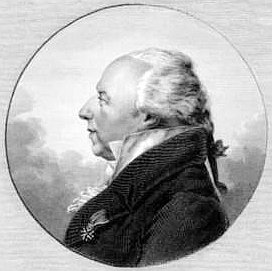
Image: BnF, Wikimedia Commons, domaine public
A pupil of his uncle Nicolas-Gilles Forqueray, Nicolas Séjan was appointed organist of Saint-André-des-Arts at fifteen (1760), then quarterly organist of Notre-Dame de Paris from 17 February 1772 (he still held the post in 1788) and titular organist of Saint-Sulpice from 1783 until his death in 1819. Organist of the Chapelle Royale from December 1789 to 1792, he lost his posts during the Revolution, returned to Saint-Sulpice after the Concordat, became organist of the Invalides in 1806 and again of the Chapelle Royale from 1814. His Trois fugues et plusieurs noëls pour l’orgue appeared shortly after his death.
Wikipedia Scores on IMSLP Report an error
Organ loftsNotre-Dame Cathedral, Chapelle royale, Saint-Sulpice
The repertoire
Works in the project’s repertoire
4 works, all available to listen to.
Core repertoire
This classification reflects the place of these repertoires within the artistic and educational orientations of the project. It does not constitute a technical indication regarding the design of the instrument.
Biography
Life and organ music
Nicolas Séjan, known as l’Aîné (the elder), was born in Paris on 17 March 1745 and died there on 16 March 1819. Nephew by marriage and pupil of Nicolas-Gilles Forqueray, he held a Parisian organ loft from the age of fifteen, went on to combine Saint-André-des-Arts, Saint-Séverin and a quarter at Notre-Dame, and in 1783 became organist of Saint-Sulpice, which he kept until his death. An improviser celebrated by his contemporaries, he published little; his organ pieces appeared only after his death.
Key dates
- 17 March 1745
- Born in Paris
- 22 May 1760
- Organist of Saint-André-des-Arts
- 14 February 1762
- Succeeds Forqueray at Saint-Séverin
- 17 February 1772
- Quarterly organist of Notre-Dame, according to MUSEFREM
- 19 October 1783
- Organist of Saint-Sulpice
- 3 August 1795
- Professor at the Conservatoire
- 1814
- Organist of the Chapelle royale again
- 16 March 1819
- Death in Paris
A nephew of Forqueray
He was the son of Nicolas Séjan, a wine merchant in the rue des Cordeliers, and Geneviève-Madeleine Fleury. Baptised on 19 March 1745 at Saint-Côme, he had as godfather Nicolas-Gilles Forqueray, organist of Saint-Séverin and husband of his aunt Élisabeth-Nicole Séjan. According to the MUSEFREM database of the Centre de musique baroque de Versailles, which traces his career from archival documents, he became his uncle’s pupil in September 1753; he is also said to have studied with the abbé Louis-Charles Bordier, music master of the Saints-Innocents, whom the authority record of the BnF likewise names as his teacher.
He was precocious. Around 1758 a Te Deum he improvised at Saint-Merry delighted the congregation. On 1 November 1759 the vestry of Saint-Séverin granted him the reversion of Forqueray’s post. On 22 May 1760, aged fifteen, he was appointed organist of Saint-André-des-Arts in place of René Drouard du Bousset, without competition, because an organist was needed for Whitsun. On 14 February 1762 he succeeded his uncle at Saint-Séverin. Between 1764 and 1774 he appeared nine times at the Concert spirituel, where his organ concertos were played; in 1766 the Mercure de France praised a “new concerto of his own composition” performed “in a most brilliant manner”.
The great Parisian lofts
On 17 February 1772 the chapter of Notre-Dame received him as organist in place of Pierre-Claude Foucquet: he served one quarter of the year, for 200 livres. The BnF also calls him organist of Notre-Dame in 1772, and the Wikipedia articles describe him as co-titular; yet he does not appear in the list of titular organists in the article on the cathedral’s great organ. He also played for the Cordeliers of the rue Saint-Jacques (1773–1776), for the Benedictine nuns of Montmartre from 1778 and, according to the Almanach musical of 1783, at the Collège Louis-le-Grand.
On 15 and 16 May 1781, with Armand-Louis Couperin, Claude Balbastre and Jean-Jacques Beauvarlet-Charpentier, he examined the great organ François-Henri Clicquot had just completed at Saint-Sulpice, before a crowd that had come to hear it. On 19 October 1783, the day after the death of Claude-Étienne Luce, he was appointed organist of Saint-Sulpice, at 1,200 livres a year; the list of the instrument’s titular organists gives him from 1783 to 1819. In 1788, as “quarterly organist” of Notre-Dame, he was charged with his colleagues to examine Clicquot’s work on the cathedral organ. His son Louis-Nicolas was born on 10 June 1786 to Marie-Charlotte Marlé, daughter of the organist Jean-Baptiste Marlé, whom he married in 1789; his first wife, Marie-Louise Convert, had died in 1781.
The Revolution
From December 1789 to 1792, taking advantage of the king’s move to Paris, he was organist of the Chapelle royale, at 2,000 livres a year; the Wikipedia articles place this appointment in 1789, without further detail. The suppression of worship cost him his posts. In 1794 he supervised the provisional installation of an organ in the Panthéon by the builder Somer and briefly played the organ of the Opéra, which the BnF also records. In a petition to the Convention he recalled that he had been an organist in Paris “for thirty-five years”; he received relief of 3,000 livres in 1795. On 3 August 1795 he was appointed professor of the first class at the Conservatoire for keyboard, and later taught a solfège class until 1802.
After the Concordat he returned to Saint-Sulpice, where he played the Te Deum for the feast of St Peter in 1803, and in 1806 became organist of Saint-Louis-des-Invalides. Martini, in his École d’orgue published in 1804, singled out “Mr Séjan, who serves the organ of Saint-Sulpice”. Guillaume Lasceux, organist of Saint-Étienne-du-Mont, addressed him in his Nouvelle suite de pièces d’orgue (1806–1809) and saw his improvisations as “living lessons”; a review of 1808, following Lasceux, called him the “Haydn of the organ”.
The last years
In 1814 he returned to the Chapelle royale; a list of the former musicians of the Chapel notes that “he is still today the finest organist in France”. That year he also returned to the Conservatoire, and on 3 December he received the Légion d’honneur. After the Te Deum for St Peter’s day in 1818 he announced that it would be the last he would play. He died on 16 March 1819 of a stomach illness; after a service at Saint-Thomas-d’Aquin he was buried on the 17th in the cemetery of Vaugirard, according to MUSEFREM and the French article. The English article has him buried at Montmartre.
The works printed in his lifetime amount to three keyboard collections: Six sonates pour le clavecin with violin (Op. 1, 1772), a Recueil de pièces pour le clavecin ou le pianoforte “dans le genre gracieux ou gay” (Op. 2, 1783) and Trois sonates with violin and cello (Op. 3, 1784). His organ music appeared only in 1819, after his death, under the title Trois fugues et plusieurs noëls, œuvre posthume; it contains the Fugue in G minor and the Noël suisse. His son Louis-Nicolas succeeded him at Saint-Sulpice and at the Invalides.
Sources
- Centre de musique baroque de Versailles, MUSEFREM database, entry “SÉJAN, Nicolas, l’aîné (1745-1819)”, updated 3 November 2021
- Bibliothèque nationale de France, authority record “Séjan, Nicolas (1745-1819)”
- Wikipedia (French), “Nicolas Séjan”, consulted November 2026
- Wikipedia (English), “Nicolas Séjan”, consulted November 2026
- Wikipedia (French), “Grand orgue de l’église Saint-Sulpice”, list of organists, consulted November 2026
- Wikipedia (French), “Grand orgue de Notre-Dame de Paris”, list of organists, consulted November 2026
- IMSLP, “Noël Suisse (Séjan, Nicolas)”
- Wikipedia (French), “Louis-Nicolas Séjan”, consulted November 2026
Take part
This organ will be able to serve this music.