Baroque · French
Charles Couperin
1638 to 1679
French Classical
Open repertoire
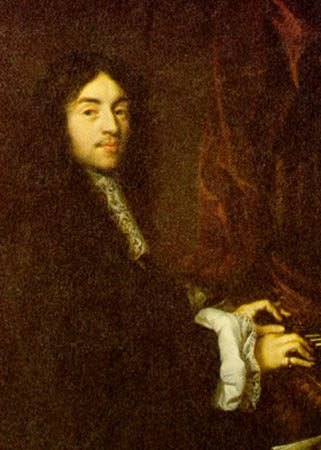
Born in Chaumes-en-Brie, the younger brother of Louis Couperin, Charles Couperin succeeded him in 1661 as organist of Saint-Gervais in Paris and held the post until his death; he was also in the service of the Duchess of Orléans. Father and first teacher of François ’le Grand’, he left no surviving works.
Wikipedia In the Couperin family tree Report an error
Organ loftsSaint-Gervais-Saint-Protais
The repertoire
Works in the project’s repertoire
0 work.
This classification reflects the place of these repertoires within the artistic and educational orientations of the project. It does not constitute a technical indication regarding the design of the instrument.
Biography
Life and organ music
Charles Couperin was baptised in Chaumes-en-Brie on 9 April 1638. The last child of Charles Couperin the elder and Marie Andry, he was the youngest of the three musician brothers, the eldest of whom, Louis, opened the organ loft of Saint-Gervais to the family. Organist of that church from 1661 until his death in 1679, he is known above all as the father of François Couperin, called le Grand. None of his works has come down to us.
Key dates
- 9 April 1638
- Baptised in Chaumes-en-Brie
- 1659
- Ballet de la Raillerie at court (participation debated)
- Christmas 1661
- Twelve-year contract as organist of Saint-Gervais
- 20 February 1662
- Marriage to Marie Guérin
- 10 November 1668
- Birth of his son François
- early 1679
- Death in Paris; the survivance of the organ is reserved for his son
From Chaumes to Saint-Gervais
According to Titon du Tillet, the three brothers, who played the violin, went one feast day to serenade Chambonnières, whose estate lay near Chaumes; the King’s harpsichordist then took Louis to Paris. Charles was then ten or twelve years old, according to the article on musicologie.org. He joined his brothers in the capital, where they soon shared the organist’s lodgings at Saint-Gervais. He took part in 1659 in the Ballet de la Raillerie, performed at court: Bouvet states this as fact, more recent accounts are cautious.
When Louis died in 1661, it was Charles who took over the organ. At Christmas he received a twelve-year contract, renewed in 1673; a lease of December 1673, published by Bouvet, mentions the four hundred livres the churchwardens paid him each year. Titon du Tillet says he made his name “by the learned manner in which he played the organ”. He was also in the service of the Duchess of Orléans: the German Wikipedia article identifies her as the Princess Palatine, the French article on his son as Henrietta of England, whom he is said to have taught the harpsichord.
A son and a succession
On 20 February 1662 he married Marie Guérin, daughter of a barber of the King’s Grande Écurie, at Saint-Gervais. Their son François was born in 1668. On 15 January 1679 Charles was still godfather to a child of the instrument maker Jacques Meunier; he died shortly afterwards. The German article gives 26 February 1679, the day on which the church council reserved his post for his son and entrusted the interim to Lalande; musicologie.org places his death only between those two dates. Titon du Tillet had first dated his death to 1669, and corrected the mistake himself.
He left a large pedal harpsichord and a spinet, and passed on to his son the name sieur de Crouilly, which referred to land, not to a title of nobility. Bouvet inferred from a sentence of Titon du Tillet that he had written harpsichord pieces; yet, as Bouvet himself noted, no document describes him as a composer.
Sources
- Wikipedia (German), “Charles Couperin”, consulted November 2026
- Musicologie.org, “Couperin Charles (1638-1679)”, consulted November 2026
- Évrard Titon du Tillet, Le Parnasse françois, Paris, 1732, with its first supplement (Internet Archive)
- Charles Bouvet, Une dynastie de musiciens français : les Couperin, organistes de l’église Saint-Gervais, Paris, Delagrave, 1919 (Internet Archive)
- Wikipedia (French), “François Couperin”, consulted November 2026
Take part
This organ will be able to serve this music.